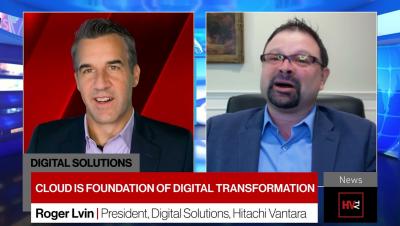
A Digitally Transforming World Turns to Cloud
Digital transformation is critical for all industries, and Hitachi Vantara’s digital solutions can lead all organizations to digital modernization and innovation.

When AI came on the scene in analytics, Qlik took a very different approach than ‘black box’ tools. We felt strongly that AI should be utilized to enhance human intuition, instead of replacing it. And of course, the term augmented analytics is now well known. That’s not a coincidence.
Today we’re announcing a public preview for the BigQuery native JSON data type, a capability which brings support for storing and analyzing semi-structured data in BigQuery. With this new JSON storage type and advanced JSON features like JSON dot notation support, adaptable data type changes, and new JSON functions, semi-structured data in BigQuery is now intuitive to use and query in its native format.
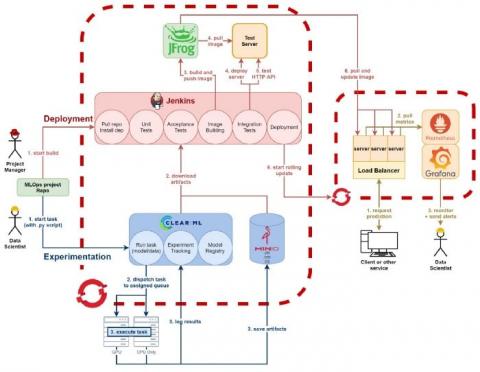
Most data science projects don’t pass the PoC phase and hence never generate any business value. In 2019, Gartner estimated that “through 2022, only 20% of analytic insights will deliver business outcomes”. One of the main reasons for this is undoubtedly that data scientists often lack a clear vision of how to deploy their solutions into production, how to integrate them with existing systems and workflows and how to operate and maintain them.