Need an account? Sign up at: https://bit.ly/3p2msvL
Moesif in 100 Seconds Playlist: https://youtube.com/playlist
Video Tutorial Playlist: https://youtube.com/playlist
Need an account? Sign up at: https://bit.ly/3p2msvL
Moesif in 100 Seconds Playlist: https://youtube.com/playlist
Video Tutorial Playlist: https://youtube.com/playlist
Need an account? Sign up at: https://bit.ly/3p2msvL
Moesif in 100 Seconds Playlist: https://youtube.com/playlist
Video Tutorial Playlist: https://youtube.com/playlist
This article is based on Ballerina Swan Lake Update 7.2. Today, I want to share insights into implementing GraphQL subgraphs in Ballerina. But before we dive into coding, let's take a moment to understand GraphQL federation and the problems it solves. Ballerina Swan Lake WSO2 is an open-source and cloud-native programming language optimized for integration GraphQL Federation is a way to build a unified GraphQL API by combining multiple GraphQL services.
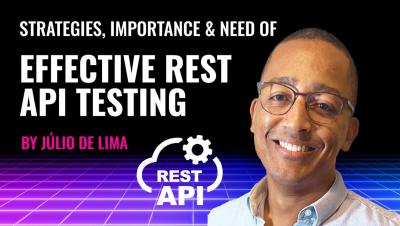
APIs enable seamless data communication among software applications and digital services, making it one of the most essential backbone of our modern society. Carrying such importance, API testing is always highly recommended to ensure that the API is working as expected. However, APIs may not be fully available to be tested, especially during the earlier stages of development, or when the API providers impose certain access restrictions to their APIs.
Monetizing an AI-based API can be a strategic decision that holds the potential to drive growth and financial stability for artificial intelligence companies. An API that doubles as an AI tool offers valuable services and capabilities that can be utilized by a diverse range of users and industries.