Systems | Development | Analytics | API | Testing

Integrating Applications Through an API-First Approach

As the enterprise IT landscape becomes larger and more complex, many organizations are finding it difficult to manage all of their systems and services. According to a study by the access management company Okta, businesses use an average of 73 different enterprise software applications — and 1 in 10 businesses use more than 200 apps. On-premise business APIs can help connect these applications, but they come with several noteworthy drawbacks.


How to Generate a Redshift API

In the business world today, data is becoming increasingly more important with each passing year. If your company is not taking the time to learn how to store, analyze and scale data properly now, it could prove detrimental to the business in the long run. However, just as bad data practices can hold your company back, good data practices can propel the company forward. APIs are one tool that any business can use to begin better utilizing their data today.

Generating Dynamic Signatures for API Authentication With Insomnia

Earlier this year, we hosted our inaugural Kong Summit Hackathon. This virtual competition engaged our open source community and offered recognition and prizes for hacks in various categories. The community delivered with ingenious plugins, hacks and documentation. In this blog post, we highlight our Insomnia plugin winner, Scott Harwell. Scott works with many hyperscalar cloud infrastructure vendors.

Kuma 1.4 and Kong Mesh 1.5 Released With RBAC, Windows Support, 2x Performance and 25+ New Features

We are happy to announce a new major release of Kuma, and a new major release of Kong Mesh built on Kuma! Kuma 1.4 ships with 25+ new features and countless improvements, particularly when it comes to performance. As previously announced at Kong Summit 2021, Kong Mesh ships we enterprise capabilities for large scale service mesh deployments, like RBAC, and native support for Windows VMs.

Faster Microservice-to-Microservice encrypted communication with Kong Mesh and Intel

Service Mesh is an infrastructure layer that has become a common architectural pattern for intra-service transparent communication. By combining Kubernetes a container orchestration framework, you can form a powerful platform for your microservices cluster, addressing the typical technical requirements that occur in highly distributed environments. A service mesh is implemented through a sidecar configuration, or proxy instance, for each service instance.

Metrics and Logs Are Out, Distributed Tracing Is In With Chinmay Gaikwad | Kongcast Episode 5

In this Kongcast Episode, Chinmay Gaikwad, tech evangelist at Epsagon, explains why metrics and logs aren’t sufficient for companies with a microservices architecture. Instead, Chinmay recommends leveraging distributed tracing for optimal observability.

5 Benefits of an API Management Platform

With each passing year, companies are becoming increasingly more dependent on APIs. Essentially, any organization looking to take advantage of the latest cloud technologies is dependent on APIs. Therefore, understanding how APIs work and how to best manage APIs is crucial. However, tackling APIs alone can be quite challenging for many companies.

The Evolution of APIs: From RPC to SOAP and XML (Part 2)

In our last blog post, we discussed the evolution of APIs from early computing to the PC era. In this post, we’ll discuss the evolution of APIs in the early internet age. Along the way, we’ll touch upon associated core technologies such as eXtensible Markup Language (XML) and discuss the introduction of web services and its common components: SOAP and WSDL.

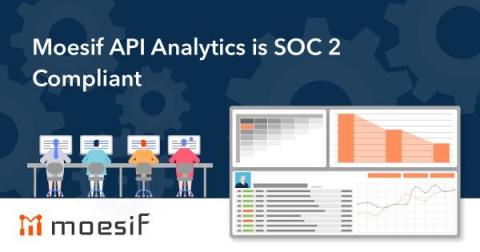
Moesif API Analytics is SOC 2 Compliant

Moesif is pleased to announce that it has successfully completed its SOC 2 Certification. The Moesif API Analytics Platform has now been independently verified to comply with the highest standards of security. Through completion of this comprehensive level of certification, Moesif has demonstrated that it can reliably and securely maintain the confidentiality, availability and integrity of enterprises’ critical data assets.