Systems | Development | Analytics | API | Testing

Deployment Patterns for API Gateways Within a DMZ

A DMZ – Demilitarized Zone – is a military term, roughly summarized, as an area between two adversaries established as a buffer in order to reduce, or eliminate, the possibility of further conflict. In networking, the term usually refers to an area that acts as a buffer between two segregated networks. Here is a simplified visualization.

Kong Gateway 2.2 released!

We are happy to announce release 2.2 of our flagship open source API gateway! Those were some busy three months since the release of Kong Gateway 2.1! We have pushed a number of patch releases in the 2.1 series, we’ve had our first fully-digital Kong Summit, and of course, we’ve been very busy building new features that are now shipping in Kong Gateway 2.2!

Announcing Kong's AWS DevOps Competency

Kong Enterprise is a service connectivity platform that provides technology teams with the architectural freedom to build, operate, observe, and secure APIs and services anywhere. From Kong’s inception, we’ve been aligned with Amazon Web Services (AWS), enabling our customers to quickly and efficiently deploy Kong on their AWS accounts. As companies move from monolithic to microservice applications and beyond, Kong helps teams manage this transition.

What is a Webhook?

A webhook provides a decoupled means for an application to provide real-time updates to other applications. A great example of webhook integration is Slack, which can automate the publication of messages to channels and users. Configured inside the Slack administration panel, a Slack webhook is identified by a unique URL, such as https://hooks.slack.com/services/12345/qwert/.

Transform Your Requests/Responses With the Kong Reedelk Transformer Plugin

Creating an API contract and corresponding Kong service are often just the first steps in the API development process. More often than not, the upstream services that are invoked provide a different contract to the one presented to the API consumer. This is especially the case in larger organizations where enterprise applications offer their own out-of-the-box integration contracts. Likewise, you shouldn’t expose the complexity of your upstream systems to your API consumer.

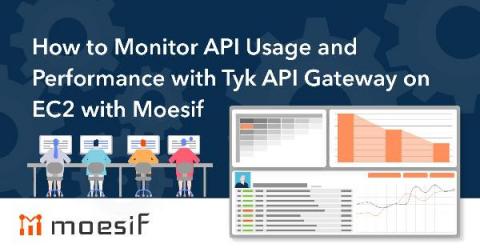
How to Set Up Monitoring and Analytics for Strapi the Headless CMS, with Moesif

Strapi is a headless CMS based on Node.js. Headless means that it makes all of its content available via an HTTP API, so you can easily build your user-facing frontend around it. Since it’s a fully-fledged CMS, it brings an administration frontend out-of-the-box, making publishing and maintaining content straightforward - even for those without a technical background. Since everything in Strapi works via an API, it’s perfect for Moesif API monitoring.

The Best Guide to Docker, Kubernetes, & Container-Based Systems

We’re taking a closer look Container-Based Systems. The rise of the microservices-based applications has allowed global enterprises – like Amazon.com, Netflix, Uber, and Airbnb – to achieve unprecedented market dominance. Central to making these microservices-based applications possible is the concept of containerization, and at the core of containerization are Docker and Kubernetes – the two most widespread solutions for building and managing container-based applications.

APIs 101: Everything you need to know about API design

Application programming interfaces, or APIs, are how software talks to other software. They abstract the complexity of underlying systems so the systems can connect in novel ways even if they were never intended to interoperate. Consequently, APIs are key ingredients in both most modern digital experiences and the execution of many of today’s most exciting business opportunities.