We collect the latest Development, Anaytics, API & Testing news from around the globe and deliver it direct to your inbox. One email per week, no spam.
Over the past year, I've spoken to more than 40 engineering teams building production AI agents. Different companies, different frameworks, different use cases. The same conversation kept happening.
The traffic visuals you see in movies shot in the USA, UAE, or even the UK, for that matter, you know how managed and clean that looks. But do you still think that it’s all fiction? Well, if you are, then you’ve got it totally wrong. The way the UAE, the USA, and even Japan manage their traffic is just phenomenal, and it’s all thanks to a smart traffic management system you didn’t know about.
The microservices revolution promised agility and scalability. Teams could deploy faster, scale independently, and innovate without monolithic constraints. You gain speed and flexibility, but you also multiply trust boundaries, identities, network paths, and policy decisions. Then came AI, and everything changed. In 2025, the security reality for AI-integrated microservices is stark.
A sports car can only be driven as fast as the road it's driven on. If you're stuck behind a tractor on a single-lane road, you're not going anywhere fast. The same idea applies to web performance: your application's throughput is only as fast as it's slowest bottleneck. For Phoenix applications, that bottleneck is almost always the database.
One of the beauties of the Rails framework is the ability to utilize Ruby on Rails associations in your models. These associations allow you to access collections of records in your code with pleasant syntax, abstracting away the need to write underlying SQL queries. That abstraction holds as long as all your data lives in one place. The moment your tables are spread across separate database clusters, certain association types stop working.
Artificial intelligence is transforming the global software industry. Some analysts refer to this shift as a “SaaS apocalypse,” with traditional software companies losing over a trillion dollars in market value. Historically, software vendors executed client visions by writing code. Now, as clients articulate their needs and AI generates code, the industry faces a critical question: What role remains for software vendors? This requires a fundamental shift.
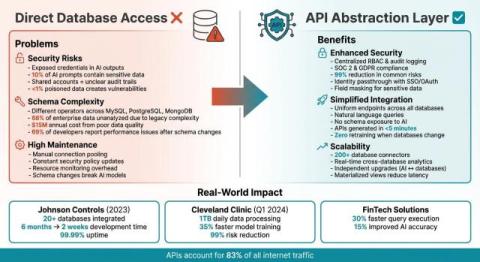
APIs are transforming how AI interacts with enterprise data. Instead of directly connecting AI to databases like MySQL, PostgreSQL, or MongoDB - which can lead to security risks, schema complexities, and high maintenance - APIs act as a secure middle layer. This approach simplifies data access, reduces risks, and ensures seamless integration with multiple databases.
If you are like most enterprise leaders, you are managing a sprawling estate of hundreds—or even thousands—of disjointed legacy applications built on outdated frameworks, consuming an estimated 55% to 80% of your IT budget just to "keep the lights on." This legacy drag stifles innovation. Yet the traditional answer—"rip-and-replace"—often makes things worse. Multi-year, high-risk projects that rewrite everything from scratch can be catastrophic.
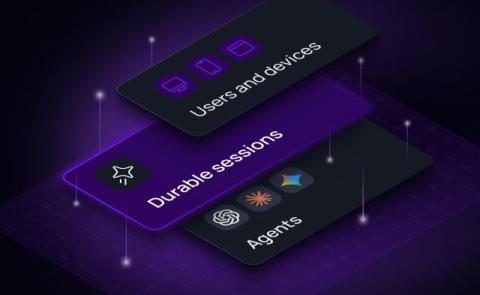
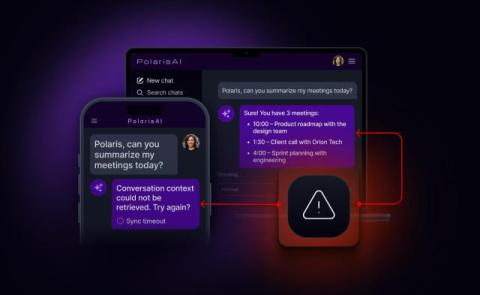
You start a research task on your laptop, the network drops during a meeting, and when you open your phone to continue, the conversation is gone – you re-prompt, get partial duplicate results, and lose 30 minutes of work. The delivery layer dropped it. That's one of the most consistent problems teams hit when building AI applications. It's particularly acute in customer support, where a session belongs to the conversation - not to any single device, connection, or participant.
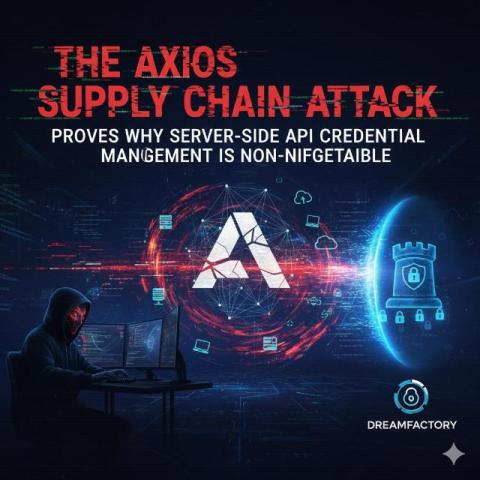
On March 31, Axios—the most widely used HTTP client in the JavaScript ecosystem, with approximately 100 million weekly npm downloads and a presence in roughly 80% of cloud environments—was compromised via a hijacked maintainer account. Two malicious versions (1.14.1 and 0.30.4) delivered a cross-platform remote access trojan (RAT) that harvested credentials, SSH keys, cloud tokens, and API secrets from every machine where they were installed.