Tune your Bitrise workflows using cache in steps
How can you speed up your workflow using Brew, Gem, and CocoaPods packages cache?


How can you speed up your workflow using Brew, Gem, and CocoaPods packages cache?
It's a fact of modern software development that aspects of our applications interact with third-party APIs. This could be for any number of reasons, with some common ones being payment processing, telecommunications, logging, and data analysis. So, since our applications rely upon third-party APIs so much, we need to ensure that we integrate with them as effectively — and defensively — as we can.
A new year is upon us and that means it’s time to look ahead to what’s coming next. In cloud computing, organizations are going to be making adjustments in 2020 – to accommodate overstrained budgets, new regulations, and shifting technologies. It will be a year of identifying what’s not working and moving toward the right solutions. Let’s take a look at three trends that will impact cloud computing across all industries in the coming year.
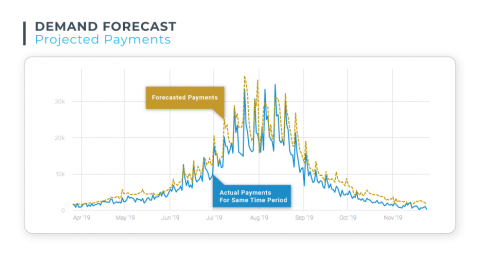
An emerging field of data science uses time series metrics to develop an educated estimate of future developments in business such as revenue, sales, and demand for resources and product deliverables. A forecast is based on historical data of a given metric plus other relevant factors. Accurate forecasts are an important aspect of corporate planning.
BPAY has been a leader in the bill payment industry in Australia for 22 years and provides a secure, fast, and convenient way to connect individuals, businesses, and banks to help people stay on top of their bills. One of the reasons that BPAY is the preferred bill payment service for so many Australians is our commitment to human-centered design.
As a company known for our anomaly detection, we know a thing or two about spotting irregularities. So as we reached the end of 2019, we couldn’t help but think back on the 2010s and the anomalies that shook the world. Once we got to listing them, it really became tough to pick just 10. Ultimately, after much debate, we ranked them based on their impact, newsworthiness and how utterly unexpected they were.
Business users haven’t adopted the dashboard wholeheartedly. Some of that is history, some of that is data illiteracy, and some of that is the fault of dashboard platforms themselves - how and who they’re designed for.
One of the challenges with being a fast-growing SaaS vendor is that you're so consumed with running your business that you're unlikely to stop and take a breath. If you’re growing quickly, there can also be a perception that you don’t really need to look at what’s happening in your business. Instead, you may divert resources to building a new product or marketing rather than actually thinking about your business.