We often hear from customers that they’re excited about what they could do with data and AI but are not sure how to do it. Or that the tech teams are “all in” but they can’t convince the powers that be to move forward. It’s not that they don’t know what to do — they could list a number of initiatives or use cases that would benefit from insights from their data or to which they could apply AI. But many organizations seem to suffer from institutional paralysis.
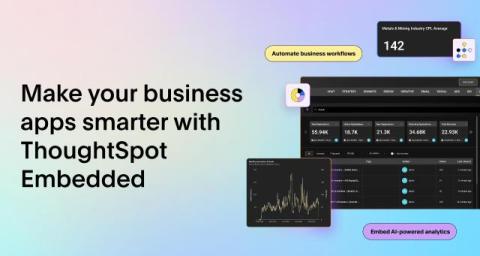
With ThoughtSpot Embedded’s modern developer tools, you can embed Spotter into any of your business applications. Spotter integrates effortlessly into your preferred platforms, seamlessly embedding within existing business applications, digital productivity tools, and custom agents to meet you where you work, so your users can ask questions of their data anywhere, at any time.
Spotter makes AI insights accessible to everyone—not just experts. With Spotter as your dedicated AI Analyst, you can use GenAI to drive meaningful outcomes in your business.
Technology in the enterprise is evolving at a record pace, making it increasingly difficult to keep up with the latest "tech du jour." AI has only accelerated this evolution, bringing about a data reckoning—especially as more organizations adopt hybrid models to manage their data. Both users and organizations are seeking data platforms that can connect the dots of their data today while adapting to tomorrow's demands. This shift underscores the growing demand for open standards. But what does that kind of platform experience look like today?
Hitachi Vantara survey finds data demands to triple by 2026, highlighting critical role of data infrastructure in AI success and revealing gaps in data governance, security, and sustainability.
We had a busy week catching up with customers and partners at Microsoft Ignite in Chicago and online. We shared lots of exciting innovations to help customers build applications, keep their data architecture open and flexible and harness the power of AI in so many ways. Here’s a quick recap.
It’s 2025, and manual finance workflows are a thing of the past—or at least they should be. Enterprises and organizations in the healthcare, financial services, logistics, and retail sectors deal with thousands of invoices daily. Considering the high volume, automation is the obvious solution to ensure efficient and streamlined operations.