Systems | Development | Analytics | API | Testing

How to Perform HTTP Requests with Axios - A Complete Guide

One of the most typical things a developer does is make an HTTP call to an API. An API request can be sent in a variety of ways. We can use a command-line tool like cURL, the browser's native Fetch API, or a package like Axios to accomplish this. Sending HTTP requests to your API with Axios is a fantastic tool. Axios is supported by all major browsers. The package can be used for your backend server, loaded via a CDN, or required in your frontend application.

The Node.js Application Maintainer Guide

TLWR: maintaining a Node.js code base is essential to ensure its success in the long term. There are three main categories to maintain an application: dependencies maintenance, Node.js versions maintenance, and Main dependencies and architecture maintenance. There is excellent content for starting the journey as a Node.js developer; you could find a handful of articles, courses, tutorials, and videos to help developers kickstart a project and guide them through the developing process.

Node.js's Underrated Combo: Passport and CASL

It’s easy to get lost with dozens of plugins and frameworks when starting a new project that requires basic authentication and authorization capabilities. It doesn’t have to be that way. In this article, we’re going to explore two valuable Node.js packages — Passport and CASL — that can help you boost the security of your application by providing both authentication and authorization functionality.

Node.js Server Monitoring: A How to Guide

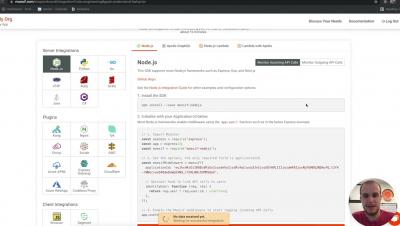
Node.js is one of the most popular Javascript frameworks in 2021. With the increasing demand for Node.js comes the crucial next step of Node.js server monitoring. The best way to monitor your Node.js server is with an Application Performance Monitoring (APM) tool. Keep in mind, Node.js server monitoring is a bit of a tricky task, and there are particular challenges you should be aware of. But don’t worry because this how-to guide will walk you through it step-by-step.

Avoiding npm substitution attacks using NCM

NodeSource is excited to announce its latest NodeSource Certified Modules - NCM - release. NCM, provides developers and software teams with actionable insights into the risk levels that are present in your use of third-party packages. This release includes updates to avoid npm substitution attacks and also a GitHub Integration: Code risk, compliance and security action for PRs on Node.js.

Announcing Worker Threads Monitoring for Node.js in N|Solid

NodeSource is very excited to announce the addition of Worker Threads support in N|Solid, it’s an amazing new feature for our customers on their journey with Node.js. Worker Threads are a very powerful feature in Node.js that allows developers to build more complex and robust applications.

Powerful Caching with Redis for Node.js Applications

Regardless of the tech stack used, many developers have already used Redis or, at least, heard of it. Redis is specifically known for providing distributed caching mechanisms for cluster-based applications. While this is true, it’s not its only purpose. Redis is a powerful and versatile in-memory database. Powerful because it is incredibly super fast. Versatile because it can handle caching, database-like features, session management, real-time analytics, event streaming, etc.

NodeSource brings C++ API to N|Solid!

NodeSource is excited to announce C++ API - Beta! 🥳 With this new API, you will be able to use all the features and power of N|Solid with your own C++ code. In case you missed it, NodeSource also launched JS API which allows you to have all the metrics and functionality of the N|Solid console using your own JavaScript code programmatically.

PagerDuty integration with N|Solid

In the latest version of NSolid v4.4.2 NodeSource introduced the new PagerDuty integration that allows users to configure message notifications that are automatically triggered when your Node.js application experiences critical performance, lifecycle, and/or security events in production. This ensures DevOps professionals looking after applications running in production, can be notified on time about new performance and security issues.