The recent acquisition of Yellowfin by Idera is a surprise for many, but there is a lot that makes sense in this exciting deal. In this blog, Yellowfin founder Glen Rabie explains the move.
Transformation is a word that isn’t commonly favored by the product community. Why? Because transformation programs rarely allow product teams to autonomously decide how they will achieve their mission. Transformation programs also incur significant costs. According to CIO Magazine, global spending on digital transformation technologies and services was US$1.3 trillion in 2020, of which 70% of that spend is wasted. That is approximately $900 billion.
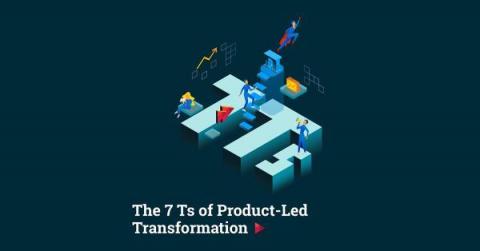
The amount of money invested in “Transformation Programs” is staggering. In the past 20 years we have seen Digital and Agile Transformation Programs grow and swell to $1.3 trillion dollars in 2020 alone. According to the HBR, 70% of that spend is wasted. Many companies miss a key component in their Transformation Program. How will a Product-Led Transformation be different?
Matching the experience of your self-service analytics tool to your users' needs has often been difficult when ‘self-service’ is different for everyone. Here's how Guided NLQ tackles this.
With a whole new Guided Natural Language Query (NLQ) capability and several new enhancements across every part of the platform, Yellowfin 9.7 is a must-have upgrade.
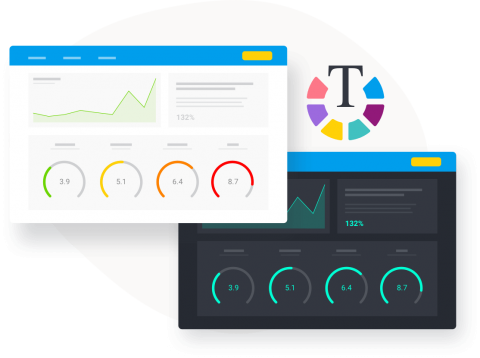
Fishies, say hello to the new Yellowfin Brand, and Brand Guidelines. Now, we shouldn’t actually say ‘brand new’ because the logo and some of the elements are a progression from what is currently our brand. But, as you have heard us say many times, our brand is not just the logo, fonts and colors. The Yellowfin brand encompasses the reason we do what we do, and it sits behind why we develop the products we develop. It’s why we code what we code.
In an ideal world, all employees serving across all job functions would be able to access and analyze all the information they need with ease. Unfortunately, today most analytics technologies still require specialized skills and expertise. As a business intelligence industry we try to overcome these obstacles by making self-service analysis easier with improvements to the user interface and streamlined processes. But we know that analysis, by nature, is complex and requires data literacy and skills.
Natural language query (NLQ) is fundamentally a feature designed to democratize self-service analytics, and help make it more pervasive throughout the organization.
As part of our series on natural language query (NLQ), this blog details 5 benefits of using Guided NLQ, and how it differs from search-based NLQ to bring users true self-service BI.