Systems | Development | Analytics | API | Testing

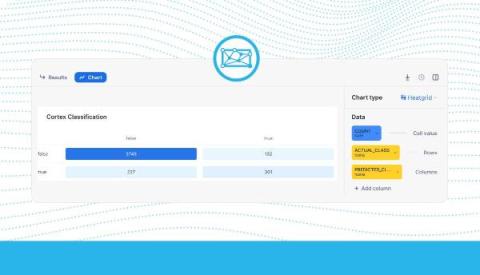
Predict Known Categorical Outcomes with Snowflake Cortex ML Classification, Now in Public Preview

Today, enterprises are focused on enhancing decision-making with the power of AI and machine learning (ML). But the complexity of ML models and data science techniques often leaves behind organizations without data scientists or with limited data science resources. And for those organizations with strong data analyst resources, complex ML models and frameworks may seem overwhelming, potentially preventing them from driving faster, higher-quality insights.

Snowflake Brings Gen AI to Images, Video and More With Multimodal Language Models from Reka in Snowflake Cortex

Snowflake is committed to helping our customers unlock the power of artificial intelligence (AI) to drive better decisions, improve productivity and reach more customers using all types of data. Large Language Models (LLMs) are a critical component of generative AI applications, and multimodal models are an exciting category that allows users to go beyond text and incorporate images and video into their prompts to get a better understanding of the context and meaning of the data.

Predicting the Generative AI Revolution Requires Learning From Our Past

Having frequently worked with governments around the world over the course of my career, I’ve had all kinds of discussions about the global impact of generative AI. Today, I’m publicly wading into those waters to deliver my perspective, and my opinion is that … it’s incredibly hard to predict the future. Done. Wrapped up this entire post in a single sentence.

The Modern Data Streaming Pipeline: Streaming Reference Architectures and Use Cases Across 7 Industries

Executives across various industries are under pressure to reach insights and make decisions quickly. This is driving the importance of streaming data and analytics, which play a crucial role in making better-informed decisions that likely lead to faster, better outcomes.

Why a Solid Data Foundation Is the Key to Successful Gen AI

Think back just a few years ago when most enterprises were either planning or just getting started on their cloud journeys. The pandemic hit and, virtually overnight, the need to radically change ways of working pushed those cloud journeys into overdrive. Cost-effective adaptability was essential. And the companies that could scale up or scale down quickly were the ones that navigated the pandemic successfully. Migrating to the cloud made that possible.

Mapbox Snowflake Native App Opens Geospatial Analytics to New Audiences

Geospatial data can give a business a competitive edge — especially when it’s combined with the company’s own data resources. Considering a new store location? You’ll want to analyze not just where your nearest competitors and potential customers are, but also retail footfall numbers, historical traffic patterns, distance from distribution centers, environmental factors, potential delivery times to customers and more. You need geospatial data to make it all happen.

How Financial Services and Retail Companies Are Accelerating their Data, Apps and AI Strategy in the Data Cloud

Last year, we held our first Accelerate event, to explore industry trends, data and technology innovations, and data strategy case studies in financial services. This year, we are expanding to five industry events, featuring leaders in financial services; retail and consumer goods; manufacturing; media, advertising and entertainment; and healthcare and life sciences. Accelerate Financial Services and Accelerate Retail are one-day virtual events brought to you by Microsoft.

The Snowflake Government & Education Data Cloud

In order to deliver on their missions, public agencies and departments must modernize IT to improve citizen services, streamline operational inefficiencies, drive research and innovation, and enable data collaboration across and beyond organizational lines. Unfortunately, the ability of public sector organizations to generate value from data is hindered by several challenges, including technical delays caused by legacy IT infrastructure, policy roadblocks, and institutional status quos. The public sector needs a protected, scalable, and flexible platform to centralize, govern, and securely share mission-critical data.