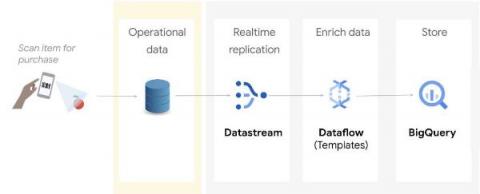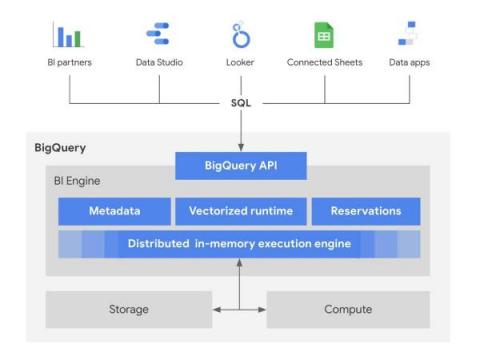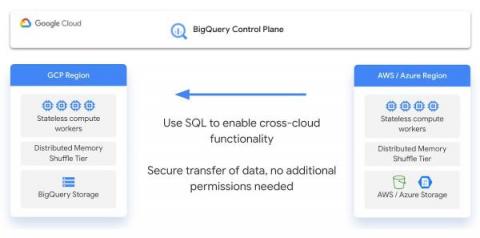
Google Cloud has a genuine passion for solving technology problems that make a difference for our customers. With the release of our BigQuery Connector for SAP, we're taking a another big step towards solving a major challenge for SAP customers with a quick, easy, and inexpensive way to integrate SAP data with BigQuery, our serverless, highly scalable, and cost-effective multi cloud data warehouse designed for business agility.
Organizations increasingly turn to AI to transform work processes, but this rapid adoption of models has amplified the need for explainable AI. Explaining AI helps us understand how and why models make predictions. For example, a financial institution might wish to use an AI model to automatically flag credit card transactions for fraudulent activity. While an accurate fraud model would be a first step, accuracy alone isn’t sufficient.
Bayer Crop Science uses Google Cloud to analyze billions of acres of land to better understand the characteristics of the soil that produces our food crops. Bayer’s teams of data scientists are leveraging services from across Google Cloud to load, store, analyze, and visualize geospatial data to develop unique business insights. And because much of this important work is done using publicly-available data, you can too!
Today we’re announcing a public preview for the BigQuery native JSON data type, a capability which brings support for storing and analyzing semi-structured data in BigQuery. With this new JSON storage type and advanced JSON features like JSON dot notation support, adaptable data type changes, and new JSON functions, semi-structured data in BigQuery is now intuitive to use and query in its native format.
In the BigQuery Spotlight series, we talked about Monitoring. This post focuses on using Audit Logs for deep dive monitoring. BigQuery Audit Logs are a collection of logs provided by Google Cloud that provide insight into operations related to your use of BigQuery. A wealth of information is available to you in the Audit Logs. Cloud Logging captures events which can show “who” performed “what” activity and “how” the system behaved.
Data teams across companies have continuous challenges of consolidating data, processing it and making it useful. They deal with challenges such as a mixture of multiple ETL jobs, long ETL windows capacity-bound on-premise data warehouses and ever-increasing demands from users. They also need to make sure that the downstream requirements of ML, reporting and analytics are met with the data processing.
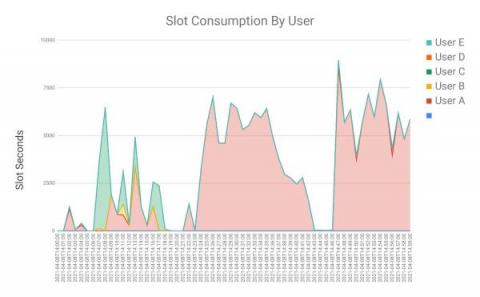
As customers grow their analytical workloads and footprint on BigQuery, their monitoring and management requirements evolve - they want to be able to manage their environments at scale, take action in context. They also desire capacity management capabilities to optimize their BigQuery environments. With our BigQuery Administrator Hub capabilities, customers can now better manage BigQuery at scale.