Systems | Development | Analytics | API | Testing

API Security: Validating Auth and Access with Traffic Simulation Starts with Behavior

Security breaches rarely begin with a hidden zero-day exploit or a complex web of escalated hacks. They often start in very simple ways – an internal team member is breached, a permission is misconfigured, an overly permissive API endpoint is overlooked, or a JWT simply doesn’t expire. An API, or application programming interface, is a set of protocols and tools that enable different software systems to communicate and exchange data, making them essential in modern software development.

API Staging Is Not Production - But Speedscale Makes It Close

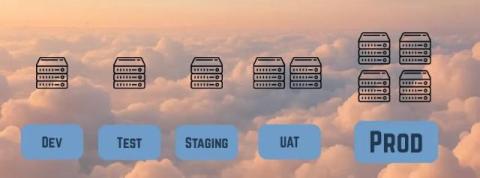
Staging environments are often looked at as the testing ground ahead of the “real” production environment. The idea is simple – build a duplicate of your production environment, run your tests, and ship with confidence. But the reality of using staging in the real world as part of a holistic API testing strategy is rarely that clean. No matter how meticulously you mirror production services, staging always falls a little short.
Sponsored Post

Boba Paradox

It's 2PM on a Thursday. Your engineering team is knee-deep in bugs from a recent release. But what's the Slack channel buzzing about? Not flaky tests. Not integration coverage. Not mocking services. It's whether to order brown sugar boba or taro with oat milk. Let's be honest: for many companies, it's easier to justify $8 on boba than $800 on testing tools. And we're not here to judge-we're here to understand why.

From Guesswork to Guarantees: How Traffic Replay Improves Release Confidence

In modern software development, the pressure to move fast is matched only by the need to get it right. Teams working within the software development lifecycle (SDLC) must constantly balance velocity and quality, ensuring releases are stable, secure, and performant. Traditional software development models often relied on manual verification and human intuition to validate releases; however, as systems have grown in complexity, guesswork is no longer sufficient to meet these rising needs.

Streamline API testing with Proxy Mock! Capture, mock, and replay API calls locally

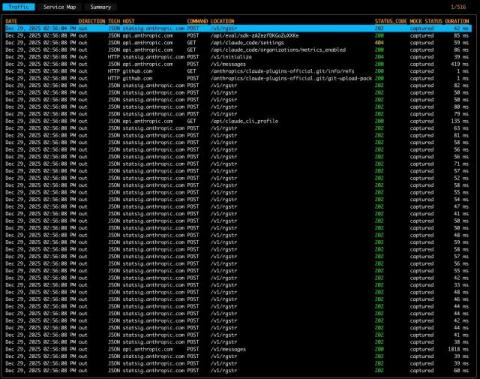
Alan Mon introduces Proxy Mock, a powerful tool for capturing and replaying API calls. Learn how to effortlessly record inbound and outbound API requests and responses. The demonstration highlights how Proxy Mock operates entirely on your local machine, eliminating the need for cloud services or internet connectivity for testing. See how to set up Proxy Mock, inspect captured API calls (including request/response headers, body, and unique signatures), and leverage it to mock API responses for seamless local testing, ultimately boosting productivity and reducing the need for costly non-production environments.
Sponsored Post

What Are Cloud Development Environments?

Especially, if you have a globally distributed team, CDEs give you a smoother developer experience just by its online nature. Instead of wrestling with conflicting dependencies, trudging with inconsistent local setups, or waiting for your code to compile, you have a powerful, instantly accessible development environment in the cloud. CDEs remove typical limitations like hardware and scalability. You can quickly get started with minimal setup and configuration, but confidently move forward due to the flexibility and customization features CDEs provide.
Sponsored Post

How to Mock OpenAI's APIs with Speedscale's ProxyMock

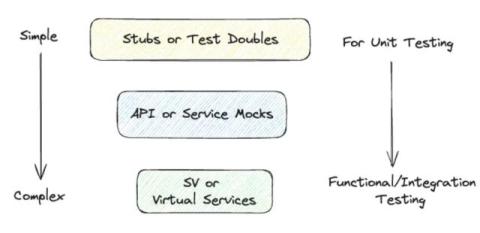
Developing APIs can often be a complex web of dependencies, external dependencies, and murky network traffic. In order to build better, developers need a certain amount of stability to test a query or feature against, and when this stability is lacking, development can get more complicated and difficult. Enter API mocking. API mocking is an approach to generating a mock service that provides dependable data for a variety of testing purposes. This data can then be used as a test case for actual API calls, allowing for more complete and accurate development.

Eliminating Flaky Tests with Traffic Replay

There are few things that can derail developer productivity and undermine your pipeline like a flaky test. Testing is the backbone of a good development process, ensuring that your code is as accurate and usable as possible. When these tests point towards faulty development, the impacts can be significant. This information is predicated on an assumption, however – the assumption that what the test says is accurate.

REST v. GraphQL v. gRPC #speedscale #developers #softwaredevelopment #shorts #softwaretesting #api

When it comes to building APIs and enabling communication between different software components, three prominent architectural styles and frameworks often come up: REST, GraphQL, and gRPC. Each has its own approach, strengths, and weaknesses, making them suitable for different use cases.