Systems | Development | Analytics | API | Testing

How to Achieve Enterprise Continuous Testing With Perforce

In the age of digital transformation, enterprise continuous testing has become critical for agile and efficient software development. But enterprises often spend too much time managing a multitude of solutions and integrations with zero cohesion between solutions and an inability to gain clear insights. It takes so much time to manage the areas around testing that there is little time for the most important part — the testing itself.

Introducing Choreo Copilot

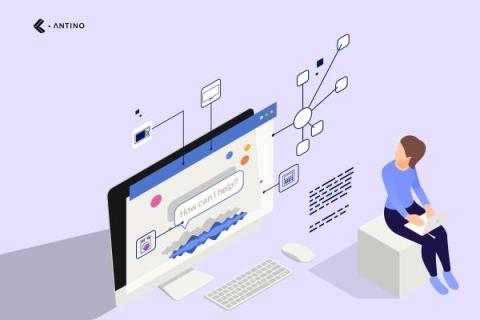
We're excited to introduce Choreo Copilot (preview), which allows you to interact with Choreo. You can pose questions in natural language and Copilot will provide answers. Choreo Copilot enables you to grasp Choreo concepts, teaches you how to perform tasks in Choreo, and provides guidance when you encounter obstacles. Copilot is familiar with APIs in Choreo’s internal marketplace. Choreo already features an AI capability that enables API testing through natural language.

What The Future of #Blockchain Testing Looks Like? | Gomathi Ramalingam | #QonfX 2024

In this session, Gomathi Ramalingam explores the future of blockchain testing in her enlightening talk, "Beyond the Block: Pioneering the Future of Blockchain Testing." Discover the necessity for testing approaches to evolve alongside blockchain technology as it gains broader acceptance across industries.

A Software Engineer's Tips and Tricks #3: CPU Utilization Is Not Always What It Seems

Hey there! We're back for our third edition of Tips and Tricks. As we said in our first posts on Drizzle ORM and Template Databases in PostgreSQL, our new Tips and Tricks mini blog series is going to share some helpful insights and cool tech that we've stumbled upon while working on technical stuff. Today's topic is short and sweet. It'll be on CPU utilization and what that metric indicates. If you enjoy it and want to learn more, I encourage you to check out the "further reading" links.

Artificial Intelligence vs. Intelligent Automation: What's the Difference?

AI injects “intelligence” into automation, enabling systems to execute tasks, comprehend complex data, make informed decisions, and learn from outcomes. Unlike technologies such as robotic process automation (RPA), which follow predetermined rules, AI leverages data to evaluate situations and determine the best course of action. Now that we've explored how AI augments traditional automation tools, let's delve deeper into the realm of intelligent automation.

Using Tc-Bpf Program To Redirect Dns Traffic In Docker Containers

The adoption of eBPF (Extended Berkeley Packet Filter) has revolutionized high-performance applications, tracing, security, and packet filtering within the Linux kernel. Specifically, TC-BPF, a type of eBPF program attached to the Traffic Control (TC) layer, has emerged as a powerful tool for packet manipulation in both ingress and egress. This blog delves into the practical application of TC-BPF to redirect DNS queries in a Docker environment.

Get Your AI to Production Faster: Accelerators For ML Projects

One of the worst-kept secrets among data scientists and AI engineers is that no one starts a new project from scratch. In the age of information there are thousands of examples available when starting a new project. As a result, data scientists will often begin a project by developing an understanding of the data and the problem space and will then go out and find an example that is closest to what they are trying to accomplish.