Systems | Development | Analytics | API | Testing

The latest News and Information on Software Testing and related technologies.

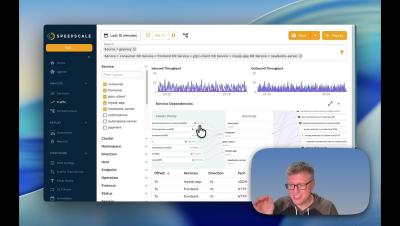
How AI Coding Is Breaking Synthetic Data Generation

Traditional synthetic data generation approaches, still called “Test Data Management” (TDM) by legacy vendor, were designed for a world where applications were monolithic, databases were the center of gravity and change happened slowly. The world looks a lot different now. Modern systems are distributed, often times event-driven, and increasingly powered by streaming data and AI agents. In this environment, batch-oriented synthetic data generation fails to capture how systems actually behave.

DLP, Traffic Replay, and the Missing Link to Software Quality

In Part 1 and Part 2 we explored why testing modern software is so difficult. Production data is the most valuable input for testing, but it’s locked away because it contains PII and sensitive context. Traditional Synthetic Data Generation (SDG) was built for batch databases, not streaming systems. And AI coding agents amplify every weakness in existing test strategies because they need current, realistic data or they generate buggy code based on outdated assumptions.

State Transition Testing: Diagrams, Tables & Examples

Ever seen a workflow pass QA, then fail the moment users retry, refresh, or hit a timeout? That gap usually isn’t about a “wrong input.” It’s often because the system is in a different state when the same input arrives. In state transition in software testing, the state decides what’s allowed, what must be blocked, and what should happen next. It is one of the simplest ways to make these workflows behave predictably in the real world.

How does Katalon help organizations start accelerating their testing?

Katalon helps organizations accelerate testing by removing complexity from automation. With an all-in-one platform, low-code options, and built-in best practices, teams can start fast, scale confidently, and deliver quality at speed without needing deep automation expertise. — Alex Martins, VP of Strategy at Katalon Follow Katalon for more insights in our series!

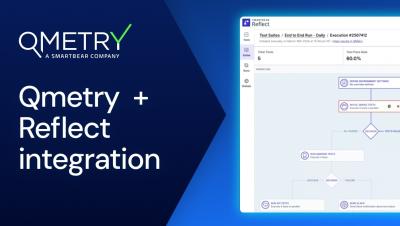
SmartBear QMetry's AI-based test generation: Execute tests in minutes

In this video, you’ll discover how SmartBear QMetry's AI-powered test generation automatically transforms requirements into complete, executable test cases within minutes. Watch as we demonstrate test generation cases from Jira, Rally, and Azure requirements, demonstrate how to refine existing tests, and save your teams hours of manual work.

5 Lessons learned building a web application crawler

Building a web application crawler came with plenty of challenges—here’s what we learned. Recently, we built a web application crawler from scratch—which had some scratching their heads, asking why we’d undertake such a thing. Here’s our answer to that, plus some interesting technical challenges we ran into and how we tackled them.

4 Steps to Take Back Control of Your Java Release Cycle and Manage Dependencies Better

Regaining control of your Java release cycle can dramatically improve build stability, security, and developer productivity. In this video, Perforce OpenLogic experts share practical guidance on Java dependency management, including how to audit dependencies, govern their use, and reduce risk in complex builds.

Navigating Spring Dependencies (Spring Boot and Framework)

Navigating Spring dependencies can be challenging. As many Java developers know all too well, the biggest risk in maintaining legacy Spring applications isn’t in the code you wrote — it’s in the web of dependencies you inherited. Hidden deep in your build files, these libraries can make or break your application’s ability to stay secure and up to date. In this video, OpenLogic experts explain how transitive dependencies in older versions of Spring Boot and Spring Framework can negatively impact your application's stability and security.
Sponsored Post

What AI Has Never Seen: The Context Gap in Code Generation

Your AI coding assistant has read the entire internet. It knows every programming language, every framework, every best practice documented in Stack Overflow answers and GitHub repositories. It can generate a REST API handler in seconds that looks perfect with clean code, proper error handling, following all the patterns. But here's what it's never seen: your production traffic. Data from a real API request. Someone filling out a form with messed up or incomplete data. AI is changing how we write and test code, but there's a fundamental gap between training data and production reality.

Silent Failures: Why AI Code Breaks in Production

You ship a small “safe” change on Friday. The diff is tiny, the tests are green, and the AI assistant was confident. An hour after deploy, your on-call channel lights up. A downstream service is rejecting responses that look fine in code review. Now you’re rolling back and rewriting a fix that should have been obvious if you had real traffic in the loop. This isn’t a hypothetical.