Systems | Development | Analytics | API | Testing

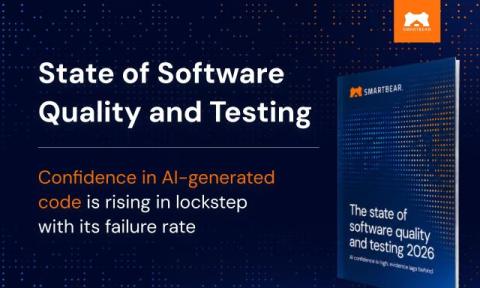
Human Testing vs. AI Testing: Striking the Perfect Balance for Flawless Digital Experiences

Twenty years of boots-on-the-ground testing experience reveals a clear pattern: the industry has moved from tracking manual test cases in Excel sheets, to managing Selenium Grid configurations, to watching algorithms generate scripts in seconds. Right now, if you are in a managerial role, your feeds are absolutely flooded with pitches promising that.

Spotter Memory: How Your AI Analyst Learns Your Business

You ask your agent a question. The answer is slightly off. You point out the gap. Spotter fixes it, and that fix doesn't disappear when the session ends. Your team doesn't re-explain the same thing tomorrow. The next analyst doesn't start from scratch. The correction stays, and the work gets better from here. That's what memory makes possible. Not just for you. For everyone who comes after.

AI Feels Out of Reach for SMB Finance Teams. Here's How to Change That.

You’ve heard the pitch: AI is going to revolutionize finance. It’s going to write your variance commentary, spot anomalies before you do, answer questions about your data in plain English, and free your team from the drudgery of month-end prep so you can focus on what actually matters: strategy, decisions, and moving the business forward. It’s easy to see why you’d believe the hype.

AI Gateway vs. Direct LLM API Integration: The Architecture Decision Defining Your AI Strategy

Enterprise AI adoption is accelerating. In PwC's April 2025 survey of 308 US business executives, 88% said they plan to increase AI-related budgets in the next 12 months . But scaling AI from pilot to production exposes a structural problem most teams discover too late: **direct LLM API integration** creates fragility at scale. The question is not whether your organization will consume multiple LLMs. It is how you will govern that consumption without building bespoke infrastructure for every provider.

How to Switch LLM Providers Without Downtime

LLM provider switching went from a theoretical concern to an operational emergency in June 2026, when Anthropic disabled Claude Fable 5 and Mythos 5 following a US government directive . The shutdown was swift, with access suspended just days after the models launched. Enterprises that had built production workflows around those models lost access overnight. The event was a wake-up call, but the underlying risk had been building for years.

AI Agent Platforms Are Getting Hacked. Here's What's Missing.

In late June 2026, two of the most widely used AI agent platforms were compromised within the same week. Langflow disclosed a critical unauthenticated remote code execution flaw. Dify, powering over one million applications, revealed four vulnerabilities that exposed private conversations and internal APIs across tenant boundaries. These weren't theoretical risks. They were production exploits hitting real infrastructure.

Beyond REST: AI Agent Integration through Model Context Protocol

Your users increasingly work through AI assistants. When they ask an agent to check a case status, analyze last quarter's metrics, or kick off an approval workflow, that agent needs to access your enterprise systems. Enabling that connection is the core challenge of AI agent integration: giving AI assistants the ability to discover, understand, and safely interact with business applications and data on behalf of users.

MCP vs REST APIs for Data Integration: When to Use Each

Your data integration team just asked: "Should we use MCP or REST APIs?" The answer is yes to both. With the ETL market reaching $10.24 billion in 2026 and projected to grow to $21.25 billion by 2031, understanding when to leverage each technology determines whether your AI agents can autonomously adapt to changing data needs or require manual code updates for every new integration.

How to Connect Your Data Warehouse to AI Agents With MCP

Your organization invested heavily in a data warehouse, yet business users still wait days for answers to simple questions. The disconnect between where data lives and who needs it remains one of the persistent challenges in enterprise analytics. With 95% of AI pilots failing due to poor data foundations and accessibility issues, companies need a standardized way to connect AI agents to their existing data infrastructure.