How Generative AI Will Impact the Pharmaceutical Industry

By Noam Harel In the ever-changing landscape of the pharmaceutical industry, the integration of generative artificial intelligence (AI) holds immense promise and potential alongside risk, patient and consumer safety and tight regulation. Generative AI refers to the ability of machines to autonomously create new and unique content, ideas, or solutions.

Mind the Gap: Bridging the Business Unit AI Innovation Gap

By Noam Harel In the fast-paced and ever-evolving business landscape, innovation has become the lifeblood of success. Yet, many organizations fail to harness the full potential of innovation due to a significant gap between their business units. This gap, like a hidden chasm, prevents the sharing of best practices, stifling growth and hindering progress.

API Analytics and Monetization with Choreo and Moesif

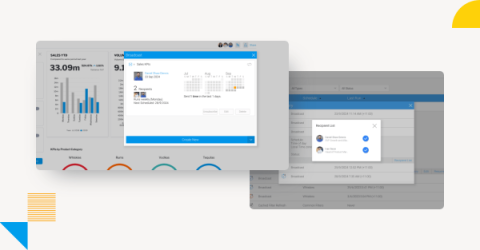
We're excited to announce the partnership between Choreo and Moesif, bringing you an integration for improved API analytics and monetization. Choreo is our application development suite designed to accelerate the creation of digital experiences. It simplifies the process of building, deploying, and monitoring cloud-native applications, boosting productivity and fostering innovation in organizations.

Comparing Data Visualizations: Bar vs. Stacked, Icons vs. Shapes, and Line vs. Area

Great data visualizations have the power to persuade decision makers to take immediate, appropriate action. When done well, data visualizations help users intuitively grasp data at a glance and provide more meaningful views of information in context. Good data visuals give busy workers a high-level summary of important data. They also offer a big-picture perspective and highlight trends, anomalies, and outliers while giving users the option to drill down into details and ask new questions when needed.

From Hive Tables to Iceberg Tables: Hassle-Free

For more than a decade now, the Hive table format has been a ubiquitous presence in the big data ecosystem, managing petabytes of data with remarkable efficiency and scale. But as the data volumes, data variety, and data usage grows, users face many challenges when using Hive tables because of its antiquated directory-based table format. Some of the common issues include constrained schema evolution, static partitioning of data, and long planning time because of S3 directory listings.

Demo: Real-time Data Pipelines for Databricks Lakehouse with Qlik

Discover how Qlik's Data Integration Platform automates and accelerates your data pipeline for Databricks. In this demo, you will see why Databricks choose Qlik as their “Integration Partner of the Year”, with our Change Data Capture (CDC) capabilities, real-time data ingestion, and powerful analytics features. Enhance your AI, machine learning, and data science initiatives with secure and compliant data access. Deploy in any cloud configuration and integrate with diverse data sources.

The Future of Data Pipelines: Trends and Predictions

The global data integration market size grew from $12.03 billion in 2022 to $13.36 billion in 2023, making it evident that organizations are prioritizing efficient data integrations and emphasizing effective data pipeline management. Data pipelines play a pivotal role in driving business success by transforming raw datasets into valuable insights that fuel informed decision-making processes.