Systems | Development | Analytics | API | Testing

How a Marketing Intern Ended Up Running Claude in a Terminal

Before I ever ran Claude in my terminal, I thought I already understood AI tools pretty well. Like most people, I had used ChatGPT, Google Gemini, and Perplexity for everyday tasks. Such as helping with schoolwork, organizing ideas, summarizing information, or getting through something faster when time was tight. They were useful, but they still felt separate from how real work happened.

Beyond API management with DreamFactory | Dreamfactory

API managers are often used to expose REST APIs to an internal or external group of developers. An internal group of enterprise developers might use a catalog of API services as a starting point for software development projects. An external group of partners might use the APIs for integration with their backend systems. In some cases, partners might use the APIs to purchase goods, services, or information.

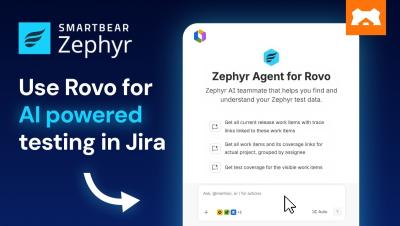
New Zephyr Skills for Rovo: AI-powered test management in Jira | Zephyr

Release day shouldn't mean chasing answers across Jira. SmartBear Zephyr is the Jira-native testing system of record that empowers your team to deliver better software, faster. In this demo, see how Zephyr Skills for Rovo bring test management and automation insights directly into Jira. Connect planning, testing, and delivery in a single, unified workflow within the Atlassian system of work so your team can make faster, more confident release decisions.

Multi-Version API Management for AI Workflows | DreamFactory

Last Updated: May 2026 Asking the right questions when building an API for AI systems is critical, especially when updates risk breaking existing integrations. Here's the deal: API versioning ensures your AI workflows stay stable while introducing new features. By supporting multiple API versions, you can test updates, maintain compatibility, and avoid disruptions.

Reflect vs. Playwright: Choosing the right test automation approach

Organizations with AI mandates face a fundamental choice in test automation: adopt AI-native testing tools like SmartBear Reflect or use AI coding tools to accelerate adoption of code-based frameworks like Playwright. Reflect is a cloud-based, no-code test automation platform built around accessibility and speed. Playwright is Microsoft’s open-source, code-based testing framework built for flexibility and engineering control.

Building a Secure, Scalable AI Infrastructure with Kong and Akamai: A Technical Introduction

As organizations transition from experimental AI to production-grade systems, they often face a fragmented landscape of unmanaged LLM providers, complex tool integrations, and escalating security risks. This infrastructure gap leaves AI applications vulnerable to sophisticated threats like prompt injection and data exfiltration, necessitating a unified stack that secures the edge while streamlining the data plane..

From Kafka Chaos to Control: A Practical Guide to Governing Real-Time Data

Most engineering teams adopt Apache Kafka for one simple reason: it works. It scales effortlessly, it is incredibly reliable, and it powers real-time systems across almost every industry. But as your Kafka usage expands across different teams, regions, and external consumers, success creates a brand new problem. Kafka is a massive data firehose, and without the right nozzle, it quickly becomes unmanageable.

Is Oracle API Gateway Reaching the End of the Road? What to Do Next.

Last Updated: May 2026 Oracle API Gateway (OAG), the product that grew out of Oracle's 2012 acquisition of Vordel, has been on a long deprecation path. With Oracle steering customers away from on-premises OAG and toward newer cloud-based offerings, technical decision makers are facing a familiar question: stay on a product without a future, or pick a replacement that fits where the business is actually going?