Systems | Development | Analytics | API | Testing

Featured Post

Unlocking Innovation with the API Economy

As the technology stacks utilised by modern businesses grow increasingly complex, so does the number of integrated applications that are required to work together. The key enablers of this collaboration are Application Programming Interfaces (APIs), which act as the "glue" between applications, machines and databases, and let the different elements of an organisation's system work together as one cohesive whole.

The Role of Integration in the Agentic Enterprise

In this episode of, *Steve Jordan* and *Shafreen Anfar* from WSO2 explore how integration is paving the way for the agentic enterprise, where humans and AI agents collaborate to drive business success. They discuss how seamless connectivity across systems provides agents with the real-time context and ability to take action that is necessary to scale AI from simple pilots to full-scale production. The conversation also highlights the importance of robust security, governance, and observability in managing this new digital workforce.

What is an AI Data Gateway? | DreamFactory

An AI Data Gateway is a secure intermediary that connects enterprise data sources (like databases and file systems) with AI systems. It simplifies how AI accesses data while enforcing strict security, compliance, and governance measures. Instead of allowing direct access to sensitive data, the gateway uses secure REST APIs to control and monitor all interactions.

JavaScript Is Evolving Faster Than Ever - And JSConf Spain Made It Impossible to Ignore

There’s something powerful about stepping away from your day-to-day work and being surrounded by people asking the same questions you’ve been thinking about: At JSConf Spain, those answers don’t come from a single talk. They emerge from patterns — ideas that repeat across different speakers, different companies, and different perspectives.

The State of Real Estate Data: Perspectives From Industry Leaders

For years, real estate has been described as a data-rich industry. But in practice, most organizations still struggle to collect, trust, and use their data at scale. Across multiple episodes of the Innovation Blueprint podcast, founders, CEOs, and operators repeatedly came back to the same conclusion: the real challenge in real estate isn’t analytics or AI — it’s data foundations.

Beyond the Hype: Is Your Organization Ready for AI at Scale?

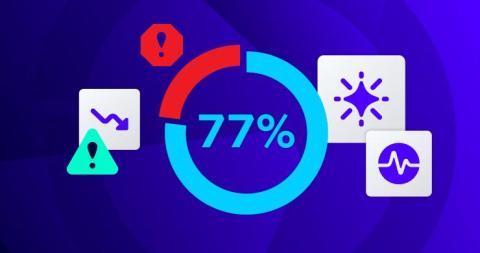
According to Perforce's 2026 State of DevOps report, there is a direct correlation between DevOps maturity and AI success. In a highly mature DevOps environment, AI accelerates innovation, optimizes workflows, and enhances security. In an immature environment, it scales chaos, multiplies risk, and inflates costs. So, before we ask ourselves how to make the most of our AI solutions, we must assess if our foundational processes are prepared for the challenge ahead.

AI Portfolio Management: Governing AI Investments at Scale

Are you still evaluating when and how to implement AI across your asset and wealth management operations? While many organizations remain in the planning stage, others have already started integrating AI into their decision-making frameworks because AI adoption in the FinTech space has matured enough. According to the PwC Asset & Wealth Management Report, firms adopting AI-led transformation could see up to a 12% revenue increase by 2028.

Zero-ETL Database APIs: Live Data Without Data Movement | DreamFactory

Zero-ETL Database APIs let you access live data instantly without needing traditional ETL processes. Instead of extracting, transforming, and loading data, these APIs query databases directly in real-time, significantly reducing delays that can span hours. Key features include federated querying (accessing multiple data sources simultaneously) and schema-on-read (applying schemas dynamically during queries).

Building a Django Chat App with WebSockets

Django is well known for being used to develop servers for HTTP connections and requests for applications. Unfortunately, when building Django chat app or any chat app that requires the connection to remain open for a two-way connection, using an HTTP connection is inefficient. WebSockets provide a means of opening a two-way connection between the client and the server so that all users connected to the open network can get related data in real time.