Systems | Development | Analytics | API | Testing

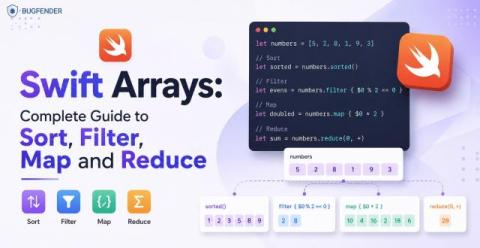
Swift Arrays: Complete Guide to Sort, Filter, Map and Reduce

Swift arrays are one of the most commonly used collection types in iOS and macOS development. They provide ordered, type-safe storage for values and include powerful higher-order functions such as map, filter, reduce, and sort. With value semantics, copy-on-write optimisation, and a rich set of built-in operations, Swift arrays make it easier to write safe, efficient, and expressive code. This guide will empower you to master the basics of Swift arrays and explore all the functionality they provide.


React Native OTA updates: Bitrise CodePush demo

From our CodePush webinar: a practical walkthrough of setting up and managing CodePush for over-the-air (OTA) updates on Bitrise using a React Native application. Staff Solutions Engineer Atanas Chanev shows you how updates are handled by pushing a direct update via the command-line interface, promoting a staging release to production, and executing an emergency rollback to a previous version using the API.

The best GitHub Actions runners in 2026 (and hidden pricing traps to avoid)

GitHub Actions is the default CI/CD tool for most teams. The runners underneath it, the actual machines your jobs run on, are where the pain shows up. Standard GitHub-hosted runners are slow for heavy repos and complex workflows. The faster ones are gated behind Team and Enterprise plans. GitHub Actions pricing is also notoriously hard to understand, especially for macOS.

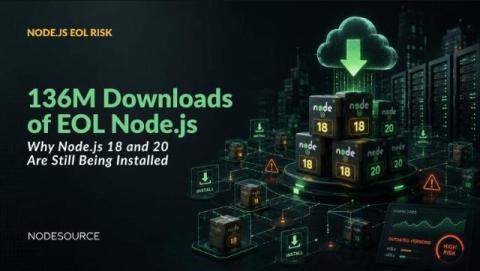
Node.js 18 and 20 Are EOL-Yet They Were Downloaded More Than 136 Million Times in July 2026

Node.js 24 is the latest Long-Term Support release, and Node.js 26 is the Current release line. Node.js 18 and Node.js 20, meanwhile, have both reached End-of-Life (EOL). That should make the direction of travel obvious. Instead, Matteo Collina’s analysis of Node.js download data showed that even discontinued Node.js 12, 14, and 16 release lines were still generating tens of millions of downloads per month, highlighting how slowly the ecosystem moves away from unsupported versions.

Which Customer Integrations Actually Drive Revenue in Real Estate Platforms?

Ask a PropTech team how many systems their platform connects to and you’ll usually get a number they’re a little proud of. A typical platform ties into an MLS feed, a couple of CRMs, a payments provider, an e-signature vendor, and a scatter of data sources, yet it still converts and retains about the way it did a year ago. So the question worth asking about real estate platform integrations isn’t how many you can support.

What Are AI Agents Actually Doing When They Talk to Each Other?

You've probably seen the demos. An AI model kicks off a task, hands pieces of it to other AI models, and somehow the whole thing gets done. Emails drafted, code reviewed, reports summarized — all without a human in the loop. While a single agent doing one thing is impressive, the true paradigm shift occurs when transitioning from single-agent to multi-agent AI systems. It looks like magic. It isn't.

A New Dawn: Enterprise AI's Shadow - Trillions of Tokens, Zero Governance

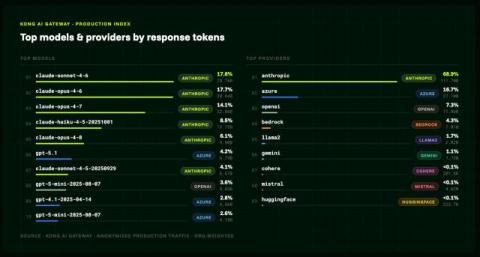
You Can't Govern What You Can't See A decade ago, cloud and API sprawl got ahead of governance, and enterprises spent years trying to account for costs they'd never tracked. Today, we're seeing the same pattern around AI, with hundreds of customers proxying traffic via Kong AI Gateway, which includes LLM, MCP, and agent connectivity. *AI spending will reach $2.59 trillion in 2026.* I regularly like to share what we're seeing in production at Kong.

P4 One Experiments: Test New Ideas in Unreal Engine | Perforce

Join Josh Sherwood, Perforce Principal Software Engineer, for a walkthrough of P4 One Experiments, Perforce's newest plugin for Unreal Engine. If you've ever wanted to try a new idea in your Unreal project (an alternate character model, a new level layout) without risking your main project, this plugin is built for exactly that.

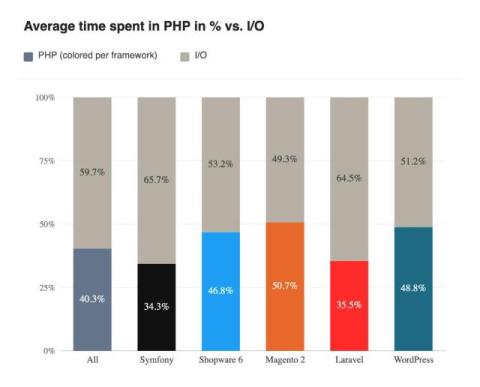
Mythbusting "PHP is rarely the bottleneck," data shows 40% of time spent in PHP

In discussions about PHP performance optimizations and micro-optimizations, there is often someone hand-waving the discussion down with, “PHP is rarely the bottleneck; I/O is.” But is that really true? Our data shows otherwise: across 1240 production projects, the average time spent in PHP is 40.3%. For 34% of these projects, they even spent more than 50% of their time in PHP, not in I/O. So, PHP often is the bottleneck, and depending on the framework, the effect is even higher.