

Systems | Development | Analytics | API | Testing

The Architecture Decision Your Multi-Agent System Will Live With

Most teams building multi-agent systems hit the same wall at roughly the same point. The prototype works. Agents chain together, tasks complete, the demo impresses the room. Then someone asks: "What happens when this runs a thousand times a day? What happens when an agent calls an external API that's down? How do we know what the agents actually did?" That's when the architecture conversation starts. Here's the framing that clarifies most of these questions.
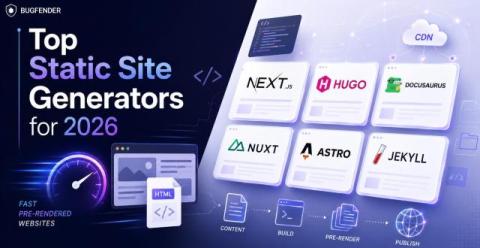
Top Static Site Generators for 2025

Static site generators have never been more relevant. AI search tools favor fast, pre-rendered content. Hosting costs are near zero. Build tooling has matured to the point where shipping a production-ready static site takes hours, not weeks. But while the benefits of SSGs are clear, choosing the right SSG for your business can be much more tricky. There are lots of competing options, all with their own pros and cons.

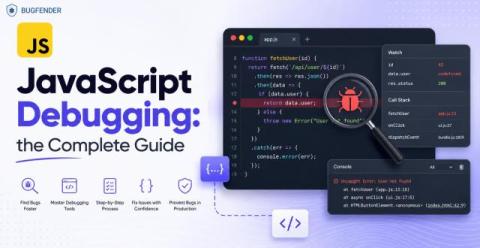
JavaScript Debugging: the Complete Guide

An effective JavaScript debugging process is vital for any web developer. Over 95% of the web is built with JavaScript code, but the language carries its own distinct challenges due to its unique runtime model. This guide will help you master these challenges and become truly fluent in the Internet’s first language. You’ll learn about: You’ll leave with a process that works in any case, no matter how edgy.

Government API Use Case: How to quickly connect your application with Data.

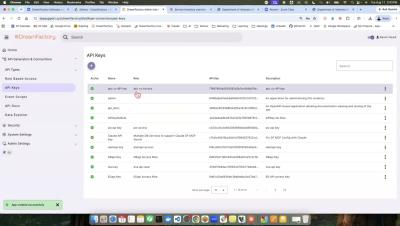
Getting data out of source systems and into the applications that need it is usually slow, custom, and hard to secure. Today I'll show you how DreamFactory solves that as a secure data gateway. This demo today is based on a government healthcare use case.

How DreamFactory Helps Schools Use AI Safely on Their Own Data

Every school, college, and university is being asked the same question right now: Can we use AI on our own data without putting student records at risk? The promise is real, including personalized learning, faster advising, and smarter operations. So is the fear. AI that touches student information runs straight into FERPA, breach risk, and a simple trust problem: once data leaves your control, you can't govern it.

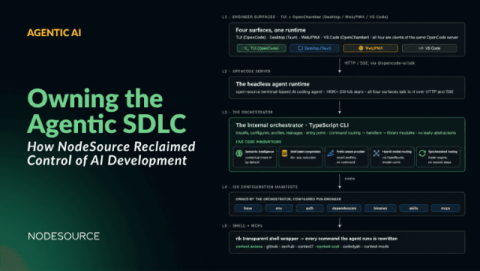
Owning the Agentic SDLC: How NodeSource Reclaimed Control of AI Development

TL;DR: When AI-assisted development moved from autocomplete to agentic workflows, the bottleneck for our engineering velocity stopped being the model and started being the vendor. Owning our own orchestration layer, running the same upstream agent stack across multiple developer surfaces, wrapping every change in a version-controlled spec, and treating the agent calls themselves as first-class telemetry is what made spec-driven development practical for us at NodeSource.

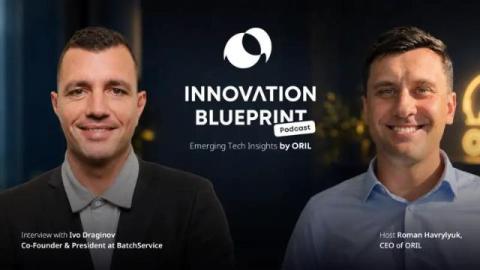
What Actually Makes Property Data AI-Ready - With Ivo Draginov, BatchService | The Innovation Blueprint Podcast

There’s a question worth asking about most property data companies: does the data come first, or the business problem? On a recent episode of The Innovation Blueprint Podcast — ORIL’s series on emerging PropTech, hosted by ORIL’s CEO Roman Havrylyuk — that question sat at the center of a conversation with Ivo Draginov, co-founder and president of BatchService.

Kong AI Gateway Applies NVIDIA NeMo Switchyard Across Model Traffic

Every team running production LLMs has had the same idea: not every request needs the frontier model. Intelligent model routing (or LLM routing)— choosing a model per request on criteria such as task complexity, cost, latency, or quality — enables more efficient model usage.

What's New in WSO2 Identity Server 7.3: Secure AI Agents

AI agents can work in the background on your behalf, but, how do you keep them from doing too much? WSO2 Identity Server 7.3 now supports Client-Initiated Backchannel Authentication (CIBA), giving ambient agents access only when the user approves each request through a push notification. The agent can act, but you stay in control.

Application Tuning: Getting More from What You Already Have

Enterprise IT leaders are often caught between the pressure to innovate and the demands of maintaining their current tech. When a system slows down or struggles to scale, it can be hard to know what to do. Rather than being stalled by uncertainty or getting distracted by fixes that don’t solve the underlying problems, Appian’s Customer Success experts encourage our customers to start with a core thesis: non-invasive application tuning should always be your first line of attack.