Integrating Moesif as a Segment Destination
Need an account? Sign up at: https://bit.ly/3p2msvL
Moesif in 100 Seconds Playlist: https://youtube.com/playlist
Video Tutorial Playlist: https://youtube.com/playlist


Need an account? Sign up at: https://bit.ly/3p2msvL
Moesif in 100 Seconds Playlist: https://youtube.com/playlist
Video Tutorial Playlist: https://youtube.com/playlist
Need an account? Sign up at: https://bit.ly/3p2msvL
Moesif in 100 Seconds Playlist: https://youtube.com/playlist
Video Tutorial Playlist: https://youtube.com/playlist
Websites and apps are slowly starting to integrate more collaborative features as a means of increasing interactivity and the functionality of various use-cases. Be it a collaborative document or a chat room, one common feature is to show who else is in the space with you. Typically this’ll be done with an Avatar Stack, a collection of icons, each representing a client connected to the space.
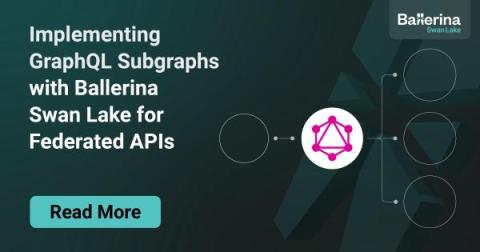
This article is based on Ballerina Swan Lake Update 7.2. Today, I want to share insights into implementing GraphQL subgraphs in Ballerina. But before we dive into coding, let's take a moment to understand GraphQL federation and the problems it solves. Ballerina Swan Lake WSO2 is an open-source and cloud-native programming language optimized for integration GraphQL Federation is a way to build a unified GraphQL API by combining multiple GraphQL services.
We use them to manage users’ log-in sessions, impose time-outs, display dates when content was posted and show the most recent publications to users. This is crucial to a variety of apps, from digital diaries to diet and exercise planners, and onto travel-booking resources. As our user bases become more geographically diverse, so time management gets even more important.
Two names that have been making waves with their distinct approaches to building web apps are Next.js and Vite.js. Next.js is a React framework specialized in server-side rendering (SSR), static site generation (SSG), and hybrid applications. It provides features like file-based routing, image optimization, and is particularly suited for projects where SEO and fast initial load times are priorities.
Data is the cornerstone of your business. Appian 23.4 builds on this foundation with our AI, data fabric, and process automation capabilities—making it even easier to get value from your enterprise data. With the new self-service analytics capability, your business users can now securely access your data fabric to browse data catalogs, build reports, and chat with Appian AI Copilot to ask questions about their data.
Appian 23.4 is here! As usual, this release is full of new and enhanced capabilities that speed up development and make your work easier. Read on for the highlights, and watch the 23.4 Product Announcement webinar or read the release notes for more on what’s new in this release.