
Systems | Development | Analytics | API | Testing

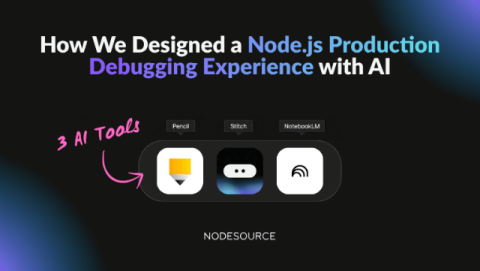
How We Designed a Node.js Production Debugging Experience with AI

Earlier this year, our team launched the N|Solid Extension, a Node.js production debugging and observability tool designed for modern development environments. The goal was simple: help developers investigate production issues without constantly switching between dashboards, monitoring platforms, and their editor. Instead, runtime telemetry, diagnostics, security insights, and AI-assisted workflows could live directly where developers already spend most of their time.

How is Agentic AI rewriting Retail Banking?

Your customers are no longer comparing you to the bank down the street. They are comparing you to Amazon, Netflix, and every hyper-personalized digital experience they interact with daily. And most banks are losing that comparison. Quite literally! Somewhere between the legacy core systems, the compliance overhead, and the quarterly earnings pressure, a tectonic shift has started. Agentic AI is no longer a concept in a research paper.

Durable Execution meets Durable Sessions: Resilient AI Agents with Temporal and Ably

Most teams building agents with Temporal have solved the backend problem: crashed workflows restart, LLM call failures retry automatically, and long-running tasks complete reliably. What they haven't solved is the client side -- what happens to the stream when the user's connection drops, when they switch devices, or when two sub-agents are working concurrently and the client needs a single coherent view.

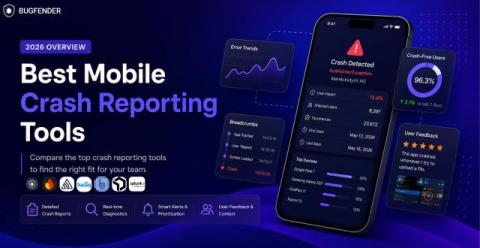
Best Mobile Crash Reporting Tools in 2026 (Free & Paid)

Mobile crash reporting tools don’t just tell us when our app’s broken down. They help us pick up the pieces and build better next time. As such they play a vital role in our quest to deliver excellent user experience, so it’s important we choose the right tool for our team, users and operating systems. In this guide, we’ll compare the best mobile crash reporting tools in 2026, including Android-focused and cross-platform solutions.

How We Used Agentic AI to Fix Kong Gateway's Flakiest Tests

Each change to Kong Gateway's codebase triggers a comprehensive test suite that runs more than 17,000 * 2 = 34,000 test cases among the two primary architectures (x86 and ARM) we support. This process takes about 23.5 hours on a single machine. But we don't wait that long. A large fleet of machines runs the suite in parallel, and we shard the work aggressively so each commit finishes in a fraction of that time. That setup works well, right up until flaky tests get involved.

Why Control Is Your New Competitive Advantage In The Age of AI | Perforce 2026

When AI Starts Shipping Code: Why Control Is Your New Competitive Advantage AI systems are already generating code, creating tests, and orchestrating infrastructure changes across enterprise software delivery. But faster execution without control creates a new kind of risk. In this webinar, Perforce CTO leaders explore why uncontrolled AI execution is emerging as one of the biggest operational risks in modern software delivery — and what leading enterprises are doing about it.

Process: The Missing Link Between AI Agent Orchestration and Measurable Enterprise Value

AI is at the center of every conversation around operational efficiency, while at the same time being sidelined. In a recent Harvard Business Review Analytic Services survey, only 18% of organizations report that AI is integrated within most of their workflows; twice as many run it as a standalone tool alongside the work. That gap—between AI that assists and AI that operates—is the defining problem of enterprise AI agents.