Systems | Development | Analytics | API | Testing

Are Your APIs Ready for AI? Preparing Your Landscape for Intelligent Consumption

Getting APIs to work with AI has become one of the major themes in the API space recently. And that’s not surprising because APIs are at the core of an AI’s ability to reach out into the world, to get access to data and information, and to invoke commands and workflows to act. This was always what APIs were for, but in this article we will dive a little deeper what that evolution looks like, and what that means for API governance and management.

What is Semantic Caching?

When we think of a typical API, part of a production-ready setup generally includes a cache. This cache allows for similar requests to be served without having to do the entire roundtrip. But when it comes to AI applications powered by large language models, traditional caching falls short. This is because queries to an AI endpoint may look different in terms of how things are worded or phrased but actually mean the same thing semantically.

You don't have to choose between GitHub and Bitrise

If you're part of a GitHub shop evaluating Bitrise for your mobile app teams, you might be hearing a familiar objection: "Why add another tool? GitHub Actions is our org standard, and it will work for mobile." It's a reasonable point. Nobody wants to maintain a snowflake system that sits outside the approved tool list. But here's the thing — it doesn't have to be GitHub Actions *or* Bitrise. The reality is that mobile CI/CD has unique demands.

On-Prem Enterprise Alternatives to Cloud-Hosted AI Dev Tools | DreamFactory

This guide explains how enterprises can replace cloud-hosted AI developer tools with secure, on-prem alternatives. It covers architectures, governance, and selection criteria that meet compliance and performance goals. You will learn how teams stand up private code assistants, model gateways, vector search, and policy controls behind the firewall.

From APIs to Agentic Integration: Introducing Kong Context Mesh

The promise of agentic AI is clear: autonomous systems that can reason, plan, and act on your behalf. But there's a fundamental problem standing between that vision and enterprise reality: agents need context to make decisions, and that context lives scattered across your organization. Context is any data — or any abstraction that enables access to data — that an agent needs to do its job. Customer records in your CRM. Inventory levels behind your fulfillment APIs.

OpenTelemetry vs. Deep Runtime Telemetry: Which Is Better for Your Node.js Stack?

If you're running Node.js in production, you've likely heard the buzz around OpenTelemetry. It's the industry standard for observability, backed by major vendors, and it promises vendor-neutral telemetry collection across your entire stack. For many teams, it's a game-changer: finally, a unified way to collect traces, metrics, and logs without getting locked into a single vendor's ecosystem.

Optimizing Bitrise Build Cache clients

Having a build cache solution is a powerful way to speed up builds, especially at scale. Bitrise Build Cache already accelerates builds across multiple ecosystems, but to get the most out of it we also need to optimize the build cache clients themselves and ensure stability across changing network environments. In this blog post, I’ll walk through the steps we took to improve stability and performance for Bitrise Build Cache customers.

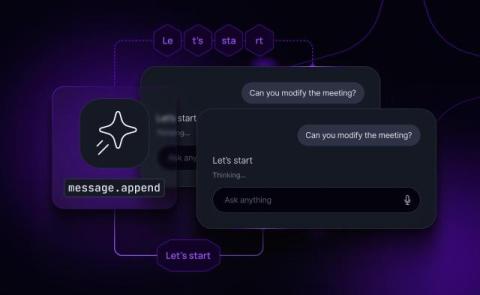
Appends for AI apps: Stream into a single message with Ably AI Transport

Streaming tokens is easy. Resuming cleanly is not. A user refreshes mid-response, another client joins late, a mobile connection drops for 10 seconds, and suddenly your “one answer” is 600 tiny messages that your UI has to stitch back together. Message history turns into fragments. You start building a side store just to reconstruct “the response so far”. This is not a model problem. It’s a delivery problem That’s why we developed message appends for Ably AI Transport.

How to add a new project in Bitrise

Learn how to add a new project to Bitrise CI with Senior PM Jeremy Palmer: selecting privacy settings, connecting your Git provider (like GitHub), and setting up webhooks to automatically trigger builds. Jeremy also covers the authorization steps, selecting a branch, and the auto-detection of your project's configuration settings.