Systems | Development | Analytics | API | Testing

Top Android Frameworks in 2026: Data from 177 Job Posts

If you want to know which Android frameworks are worth your time, job postings will tell you more than any opinion piece ever will. That’s why I searched Google Jobs for "Android developer", went through every posting the pagination would show me (177 in all), and logged every framework or library mentioned. “Required” frameworks got tagged as required. Anything in a "preferred," "nice to have," or "bonus" section got tagged as nice to have.

A Secure by Default Philosophy Guiding Perforce P4

Security expectations for version control infrastructure have evolved dramatically over the years. While Perforce P4 has always empowered administrators with deep configurability, the default configurations shipped with previous versions of P4 are no longer sufficient. With the upcoming P4 2026.1 (scheduled for availability in May), we are implementing a Secure by Default posture designed to enforce best practices when protecting the source code and binary assets stored in P4.

Why Rust Embedded Development Needs Powerful Static Analysis

For decades, software engineers have relied heavily on C and C++ to build embedded systems. These legacy languages offer the deep control and speed required for constrained environments, but they reveal gaps in memory management and concurrency. The Rust programming language has emerged as a solution.

Why production AI needs a session layer, not just a stream

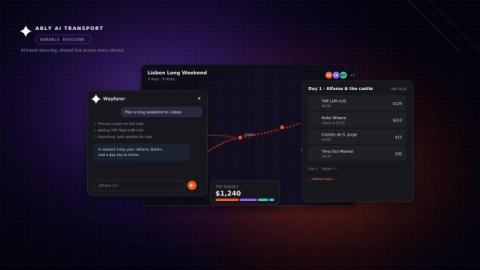
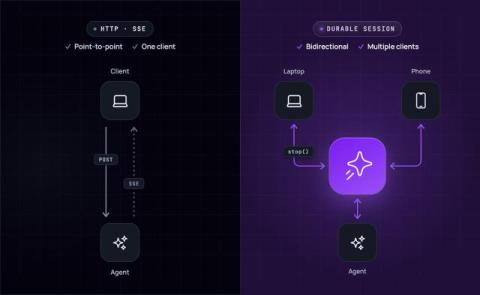
I spoke at AI Engineer Europe last week, and came away with a clearer picture of where the industry actually is right now. My talk was about why AI user experience breaks at the transport layer. But the bigger takeaway wasn't from my own session. It was from watching what the rest of the room was building, and what problems they were running into.

Agentic AI in Biopharma: Reimagining Life Science

Agentic AI is beginning to change how early-stage drug development really works by taking on the documentation burden that quietly slows innovation. In the U.S. biopharma ecosystem, the stakes couldn’t be higher. Bringing a new therapy from discovery to market often takes 10-15 years and can cost $2-3 billion per drug. At the same time, manufacturers are facing rising production costs, aggressive generic competition, and one of the most significant patent cliffs the industry has ever seen.

Errors in Python: Types, Causes, and Examples

Errors in Python are issues in a program that cause incorrect results or prevent proper execution. Some Python errors are loud and obvious, and your code barely gets started before it throws an error that tells you exactly what went wrong. Other errors are more subtle, allowing your Python program to run without complaints while silently producing incorrect results that only become apparent later.

Dynamic Kafka ACLs: Implementing Identity-Aware Policies with Kong Event Gateway

Modern Kafka deployments struggle with a familiar tension. You want fine-grained access control per client, per team, and even per request. However, traditional ACLs force you into static, cluster-level configurations that are brittle, hard to scale, and painful to maintain. Administrators are often forced to manage massive, hardcoded lists of topics and users. But what if you could dynamically craft these ACLs using identity context?

Why Vibe Coding Requires a Curated Experience Backed by Enterprise Governance

Everyone is talking about vibe coding—Claude Code, MCP, custom CLIs—using LLMs to turn intent into working logic. It’s fast. And if you aren’t leaning into it, you’re already behind. At Appian, we meet developers where they are. But speed alone doesn’t define success, and there’s a massive difference between a good workflow and a better one. Locking developers into one way of doing things is a losing strategy. That’s why we are releasing MCP and CLI tools.

OpenAPI Schema Validation for AI

Schema validation ensures AI agents interact with APIs accurately by enforcing strict rules for requests and responses. OpenAPI provides a clear, machine-readable contract for APIs, reducing errors and improving reliability. This approach eliminates issues like ambiguous responses or schema drift, ensuring predictable behavior and secure data access.

The Durable Sessions stack is forming

By Matt O'Riordan, CEO and Co-Founder Across AI infrastructure right now, one word is doing a lot of work: durable. It is attached to execution. To agents. To workflows. To sessions. To streams. To transports. To memory. Every few weeks, another product ships with "durable" in the name. This is not branding noise. The underlying observation is the same in every case. AI systems are long-lived. They can fail at any layer. They need infrastructure that assumes failure rather than hopes against it.