Systems | Development | Analytics | API | Testing

WWDC 2026: Device Hub and what it means for CI/CD

At WWDC 2026, Apple shipped a long list of changes, and we covered the ones flying under the radar in our round-up of the less-reported announcements. One of them deserves a closer look on its own: the way Xcode 27 reshapes how developers manage devices and simulators. Xcode 27 ships with a new app called Device Hub, replacing Simulator.app found in older Xcodes. Device Hub is where both physical devices and simulators can be managed from now on.

The Hidden Cost of AI Testing: Stop Burning LLM Tokens in Your CI/CD Pipeline

AI testing against live LLM APIs can quietly drive massive token costs across development, QA, and CI/CD pipelines. Every test execution consumes real tokens—at production rates—creating hidden, variable costs that scale with your AI adoption. In this video, discover how leading enterprises are eliminating LLM token spend using service virtualization. Learn how BlazeMeter intercepts API calls, simulates realistic AI responses (completions, embeddings, and large payloads), and enables full-scale testing without invoking live models.

Automotive Industry Trends 2026: AI in Automotive Software Development

Since the first vehicles were rolled out to customers, automakers have competed to deliver the newest features and the greatest benefits to the driving experience. Today, that competition is less about shaping a car’s physical characteristics and more about making cars smarter and more connected to the world around them. With thousands of car models and trim levels available worldwide, there is a fierce need to find new ways to stand out from the competition.

Vibe Coding Economically: Which Framework Is the Cheapest? (Rails vs Django vs Laravel)

Token costs used to be something most developers ignored. They simply dismissed them as theoretical. Now, they’re showing up in your Cursor/Claude Code bill, in every pasted error, in that package the AI pulled in without asking, or in that clarification round you didn’t plan for. Most developers choose a framework based on what they've used before, what the job description asks for, or simply whatever was used on their last project.

From ARR to Execution: How PropTech Vendors Forecast Growth That Holds

A growth forecast is only useful if your business can deliver on it. Many PropTech companies project ARR growth without fully accounting for the systems, integrations, implementation capacity, and engineering effort required to support it. The result is predictable: sales targets are met, but delivery teams struggle to keep pace. The strongest forecasts connect revenue goals with operational reality.

A Guide to Building Brand Identity in Appian

When we develop applications, we sometimes only focus on the “how”—how to build the processes, how to architect the data structure, and how to encode the correct logic. But for users, the "what" is their reality—and sometimes that’s overlooked during development. An application that looks and feels like your brand identity isn't just visually appealing. It builds trust, reduces cognitive load, and makes your application more enjoyable for your users.

Why your AI UX keeps breaking (and what to do about it)

I ran a webinar on this recently and had more to say than the time allowed, so this is the written version: the argument I was making, some context on the demo, and the questions that came up from people watching. The recording is below if you'd rather watch than read. The thesis: AI products are being let down by the user experience, not the model.

Why "Scalable" Architecture Fails Without Stress Testing

Have you ever launched an enterprise application that sailed through every baseline test, only to falter when confronted with real-world demand? When you’re modernizing critical workflows for a major financial institution, a “good enough” architecture is a ticking time bomb. In high-volume operations, performance failures aren't just minor setbacks—they halt transactions, stall back-office teams, and expose the business to significant operational risk.

Introducing AI Transport v0.2.0

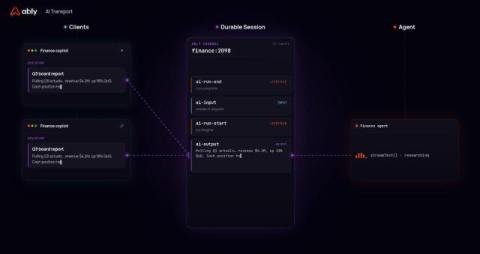
Version v0.2.0 of @ably/ai-transport reorganises the SDK to better support a wide range of interaction patterns. Everything in an AI session – input, output, agent lifecycle, control signals – is captured durably, allowing you to easily build the sophisticated interaction patterns that support modern AI user experiences. When we first built @ably/ai-transport, we modelled an AI conversation the way most people first picture it: as a request and a response.