

Systems | Development | Analytics | API | Testing

See exactly why your Gradle Build Cache missed: new Task Inputs visibility feature

Every Android developer has been there: yesterday's build finished in 2 minutes, but today's identical build takes 8 minutes. You check your code - nothing major changed. You check your environment - everything looks the same. So why the massive difference? Without visibility into what actually changed between builds, debugging performance issues becomes guesswork. You're left wondering: Which tasks didn't come from cache? What inputs changed? Why did this specific compilation task take so long?

Is Node.js Single-Threaded... or Not?

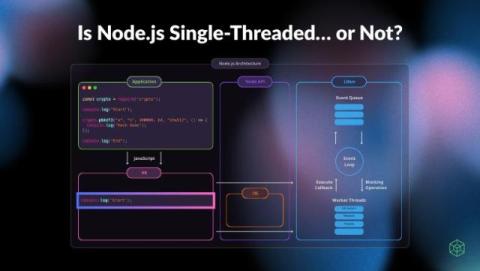
You’ve probably heard: “Node.js is single-threaded.” That statement is only partially correct. The JavaScript engine (V8) is single-threaded. Node.js as a runtime is not. Under the hood, Node.js uses multiple threads — through libuv and the operating system — to handle I/O and computationally expensive work. So the real question isn’t whether Node.js is single-threaded. It’s.

Chrome Developer Tools: The Ultimate Overview

Chrome developer tools, or Chrome DevTools, give us a window on how our websites working in the wild. Built for developers of all experience grades, they provide powerful ways to inspect, debug and optimize our projects. However the sheer breadth of functionality can be a mind-melt if you’ve not worked with DevTools before, and there are lots of advanced features that even experienced users find tricky.

How to Prioritize AI Investments Using the Impact-Maturity Matrix?

AI is no longer an experimental line item in the budget. For most U.S. CXOs, the real challenge in 2026 is far more practical: where should we place our bets first? With dozens of AI use cases competing for attention, capital, and executive sponsorship, prioritization has become a boardroom conversation, not a lab discussion. Are you investing in AI initiatives that can move the needle this fiscal year, or are you spreading resources thin across pilots that never scale?

Are Your APIs Ready for AI? Preparing Your Landscape for Intelligent Consumption

Getting APIs to work with AI has become one of the major themes in the API space recently. And that’s not surprising because APIs are at the core of an AI’s ability to reach out into the world, to get access to data and information, and to invoke commands and workflows to act. This was always what APIs were for, but in this article we will dive a little deeper what that evolution looks like, and what that means for API governance and management.

What is Semantic Caching?

When we think of a typical API, part of a production-ready setup generally includes a cache. This cache allows for similar requests to be served without having to do the entire roundtrip. But when it comes to AI applications powered by large language models, traditional caching falls short. This is because queries to an AI endpoint may look different in terms of how things are worded or phrased but actually mean the same thing semantically.

You don't have to choose between GitHub and Bitrise

If you're part of a GitHub shop evaluating Bitrise for your mobile app teams, you might be hearing a familiar objection: "Why add another tool? GitHub Actions is our org standard, and it will work for mobile." It's a reasonable point. Nobody wants to maintain a snowflake system that sits outside the approved tool list. But here's the thing — it doesn't have to be GitHub Actions *or* Bitrise. The reality is that mobile CI/CD has unique demands.

On-Prem Enterprise Alternatives to Cloud-Hosted AI Dev Tools | DreamFactory

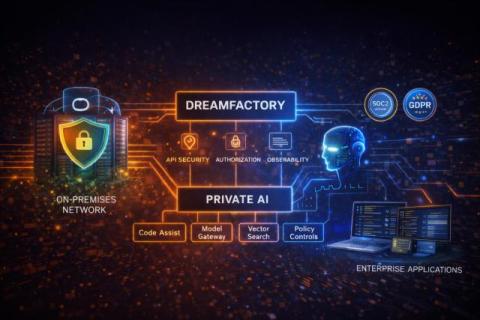
This guide explains how enterprises can replace cloud-hosted AI developer tools with secure, on-prem alternatives. It covers architectures, governance, and selection criteria that meet compliance and performance goals. You will learn how teams stand up private code assistants, model gateways, vector search, and policy controls behind the firewall.

From APIs to Agentic Integration: Introducing Kong Context Mesh

The promise of agentic AI is clear: autonomous systems that can reason, plan, and act on your behalf. But there's a fundamental problem standing between that vision and enterprise reality: agents need context to make decisions, and that context lives scattered across your organization. Context is any data — or any abstraction that enables access to data — that an agent needs to do its job. Customer records in your CRM. Inventory levels behind your fulfillment APIs.