We all remember Snake, right? That game you played on your flip-phone to while away those hours on the train or tube, attempting to stop a digital serpent from eating its own tail. Well Snake is actually part of digital history. It was the first mobile app ever released way back in 1997, the founding fathers of today’s web3 marvels with their AI, VR and machine learning.
Want to add some cutting-edge AI magic to your code? That's right, we're talking about integrating ChatGPT - the powerhouse of large language models - into your Python scripts. With ChatGPT, your code will be able to understand natural language and generate human-like responses, revolutionizing the way users interact with your applications.
Datastream, a serverless database replication service, has integrated with Terraform to enhance app modernization, data analytics and ML pipelines.
By now, most healthcare leaders know that their sector is a top target for ransomware.
With skyrocketing inflation and growing severity of weather-related losses, 2022 was a tough year for insurers. We were spot-on with our 2022 predictions—such as the need to improve the customer experience, increased adoption of connected underwriting, and the growing importance of ESG. While many of last year’s trends will continue into 2023, we have identified several emerging trends for this year.
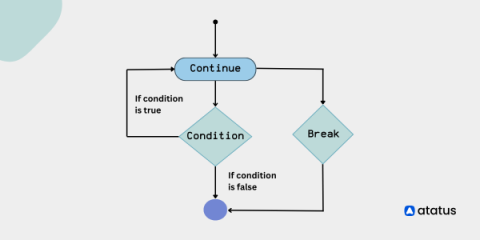
Do you find yourself frustrated with loops that never seem to end? Do you find yourself wishing you could skip certain iterations or exit a loop prematurely? Python's break and continue statements are here to save you! One of the key features of Python is its ability to control the flow of code using control flow statements. Two of the most commonly used control flow statements in Python are break and continue.
When it comes to WebRTC testing, there aren’t many feature-rich tools on the market. Loadero is one of those, testRTC is another widely known option, so we get questions about how those two compare frequently. To give a detailed answer to that question, we published this blog post in which we attempted to make a comprehensive comparison of the two tools.
Abstraction is one of the key concepts of object-oriented programming (OOP) languages. Its main goal is to handle complexity by hiding unnecessary details from the user. That enables the user to implement more complex logic on top of the provided abstraction without understanding or even thinking about all the hidden complexity. That’s a very generic concept that’s not limited to object-oriented programming. You can find it everywhere in the real world.