Systems | Development | Analytics | API | Testing

API definition-native AI testing: Support faster, confident shipping with your existing Swagger and OpenAPI specification

APIs are the backbone of modern software. They connect microservices, power mobile experiences, and make integrations possible across industries. For all their importance, API testing remains one of the most fragmented, manual, and maintenance-heavy parts of the software development lifecycle (SDLC). So as development accelerates in an AI-disrupted SDLC, application integrity – continuous, measurable assurance that your software just works as intended – becomes harder to maintain, not easier.

What Is the SmartBear Zephyr Agent for Rovo? AI testing in Jira, explained

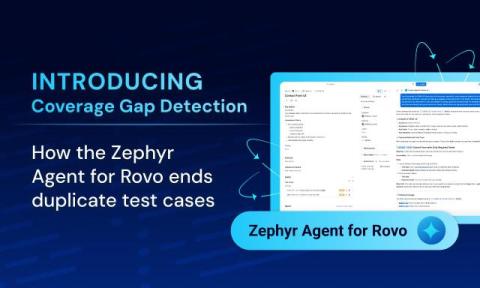
AI can now handle the slowest parts of test management, inside Jira. – The Zephyr Agent for Rovo creates test cases and links them to your work items, in the projects where your team already plans and builds. This guide covers how testing is changing in the AI age, what the agent is, where to find it, and how to run your first task.

Why traditional test metrics fall short in the AI era

Most QA teams already track the basic metrics: how many tests ran, how many passed, how much coverage exists, and how many defects turned up. Those numbers still matter, and engineering leaders will keep asking for them. The real challenge is turning those numbers into decisions, and that gets harder as AI-assisted development speeds up the volume, frequency, and complexity of software change.

What SmartBear's AWS AI Software Competency means for software teams

AI is changing how software gets built. That raises the bar for every team responsible for keeping it working. SmartBear has been developing AI capabilities across the entire quality lifecycle that help teams deliver software they trust will work at AI speed and scale. Today, SmartBear announced it has achieved AWS AI Software Competency status in the Agentic AI category through the AWS Partner program.

Enterprise test management: Should you build or buy in the age of AI?

AI has opened the door for teams to build tools they previously had to buy. With the right prompts and internal workflows, teams can generate test cases, summarize results, analyze defects, and automate parts of the testing process faster than ever. For enterprise QA and engineering leaders, that raises a practical question: “should we build our own test management layer, or adopt an AI-powered test management platform?” It’s a fair conversation to have.

SmartBear Swagger: Meeting You Where You Work

Some approaches to API governance interrupt developers mid-flow, forcing them to context-switch into a separate tool and manually verify their API definition before they can ship. That approach has never really worked. Not because developers don’t care about quality, they do, but because the best time to fix an API is the moment you’re already thinking about it. That’s what has always guided how Swagger grows. Not “come to us.” But “we’ll be there.”

AI Coding Tools and API Governance: Here's Why You Need Both.

GitHub Copilot, Claude, and Cursor have become genuine superpowers for API development. They draft OpenAPI definitions, generate endpoints, propose schema changes, and write test cases — all from inside the IDE, in real time. Teams using these tools are generating API definitions faster than most thought possible even a few years ago. That velocity is real, and it’s reshaping how engineering teams think about their toolchain.

Four signs your automation suite is costing you more than it's saving

An automation suite that’s losing ground rarely makes it obvious. Coverage numbers look reasonable. Tests are running. The CI pipeline is green more often than not. Meanwhile, the team is quietly working around what isn’t working – rerunning tests until they pass, deferring maintenance, or accepting a regression window that’s wider than it should be. Those workarounds can feel normal. They aren’t.

Why your automated UI tests keep breaking

Automated test suites tend to follow the same arc. The suite works well until the application changes and a block of tests fails. Someone fixes them. The application changes again. At some point, the work of keeping tests current starts consuming the time that should go toward coverage decisions, risk assessment, and the testing work that requires human judgment.

Automated testing vs. autonomous testing

Autonomous testing is one of the most talked about developments in software quality right now. It shows up in analyst reports, vendor pitches, conference talks, and job descriptions – often in the same breath as automated testing. Most of those conversations treat the two as interchangeable, or worse, position autonomous testing as simply a smarter, more advanced version of what teams already do.