Systems | Development | Analytics | API | Testing

Speedscale Named in Gartner Market Guide for API Testing

In the highly dynamic environment of modern engineering, an appropriate strategy for API quality is more important than ever. We are pleased to announce that Speedscale has been named in the latest “Market Guide for API and MCP Testing Tools” report from Gartner. As software development is shifting towards complex distributed architectures, integrating Model Context Protocol (MCP) for AI-based workflows, the need for realistic testing has never been higher.

Why Your Company Will Be Running OpenClaw Next Year

You’ve probably heard of OpenClaw. Maybe you’ve seen the demos where an AI agent opens a browser, navigates to your CRM, fills in a form, and files a support ticket. No API required. Maybe you thought “that’s cool but I’d never run that at work.” Your employees already are. According to Permiso’s research, 22% of enterprise customers have employees running OpenClaw without IT approval.

How AI Coding Is Breaking Synthetic Data Generation

Traditional synthetic data generation approaches, still called “Test Data Management” (TDM) by legacy vendor, were designed for a world where applications were monolithic, databases were the center of gravity and change happened slowly. The world looks a lot different now. Modern systems are distributed, often times event-driven, and increasingly powered by streaming data and AI agents. In this environment, batch-oriented synthetic data generation fails to capture how systems actually behave.

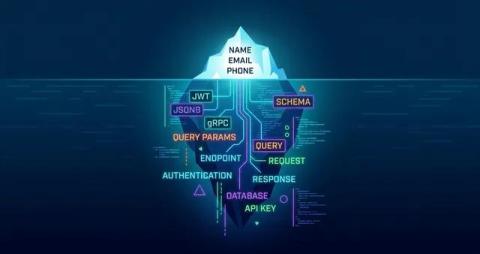
DLP, Traffic Replay, and the Missing Link to Software Quality

In Part 1 and Part 2 we explored why testing modern software is so difficult. Production data is the most valuable input for testing, but it’s locked away because it contains PII and sensitive context. Traditional Synthetic Data Generation (SDG) was built for batch databases, not streaming systems. And AI coding agents amplify every weakness in existing test strategies because they need current, realistic data or they generate buggy code based on outdated assumptions.
Sponsored Post

What AI Has Never Seen: The Context Gap in Code Generation

Your AI coding assistant has read the entire internet. It knows every programming language, every framework, every best practice documented in Stack Overflow answers and GitHub repositories. It can generate a REST API handler in seconds that looks perfect with clean code, proper error handling, following all the patterns. But here's what it's never seen: your production traffic. Data from a real API request. Someone filling out a form with messed up or incomplete data. AI is changing how we write and test code, but there's a fundamental gap between training data and production reality.

Silent Failures: Why AI Code Breaks in Production

You ship a small “safe” change on Friday. The diff is tiny, the tests are green, and the AI assistant was confident. An hour after deploy, your on-call channel lights up. A downstream service is rejecting responses that look fine in code review. Now you’re rolling back and rewriting a fix that should have been obvious if you had real traffic in the loop. This isn’t a hypothetical.

Refactor Safely with AI: Using MCP and Traffic Replay to Validate Code Changes

So as software engineers using AI coding assistants, we’re quickly learning of a new anti-pattern: Hallucinated Success. You give your agent (e.g. Claude via terminal or various IDE code assistants) the command “refactor the billing controller.” The agent happily complies, churning out nice clean code. The agent even goes so far as to write a new unit test suite that passes at 100%. You integrate it. Your test suites pass. Your production code breaks. Why?

Moving Our Observability Data Collector from Sidecars to eBPF

For years, the Kubernetes sidecar pattern has been a practical way to capture observability data. Running a collector alongside each application pod gave us deep visibility into traffic, including full request and response payloads across supported protocols. However, as cloud-native environments have grown more complex, the limitations of sidecars—such as resource overhead, operational complexity, and scaling challenges—have become more apparent.