Systems | Development | Analytics | API | Testing

How to Test Your React Frontend When the Backend Is Offline

Picture this: You’ve spent hours perfecting your React component. The animations are smooth, the responsive design works flawlessly, and you’re ready to test the user flow. You click “Submit” and… nothing happens. Or worse, you get a cryptic CORS error. The problem? Your backend isn’t running. Again.
Sponsored Post

Mocking PostgreSQL the Easy Way: Simplifying Testing with Speedscale Proxymock

Every developer who's worked with PostgreSQL knows the pain: testing against a real database slows everything down. You need the database running locally, loaded with the right data, and configured to match production as closely as possible. Every time you run a new test or build, you're forced to repeat that setup migrate schemas, seed test data, and clean everything up again. It's time-consuming, brittle, and hard to scale across a team.

What I Learned From Building an eBPF-Based Traffic Capture Application

I just finished building Speedscale’s eBPF-based component to capture and analyze network traffic in a Kubernetes cluster, and it forced me to confront some uncomfortable truths about observability. While there were certainly some challenges along the way, particularly in dealing with Go applications, the approach was relatively straightforward.

Shopify Outage 2025: Rise of the Commerce Kaiju

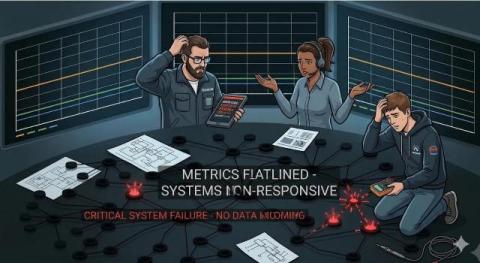
It was a normal day in the land of eCommerce. Birds were singing, dashboards were loading, and merchants everywhere felt cautiously optimistic. Then the ground trembled. A tiny glitch. A flicker. A warning log no one read. And suddenly— BOOM! Shopify burst out of the digital ocean like a gigantic scaly beast that woke up on the wrong side of the server rack. Checkouts froze mid-purchase. Product pages stopped producting. Merchants stared blankly at blank screens. The Commerce Kaiju had arrived.

KubeCon Retrospective: Platform Engineering Needs to Do More Testing

Every year, KubeCon offers a candid look at where the cloud-native community stands — the tools gaining traction, the pain points teams share, and the big gaps still holding organizations back. After a week of deep conversations, session hopping, and talking to dozens of platform teams, one theme became impossible to ignore: Platform engineering still isn’t doing enough testing. And even more surprising: many teams don’t think testing is their responsibility.

Better integration tests in Cursor using proxymock

Cursor is fantastic at cranking out code changes. I recently used it to splice a brand-new downstream API call into one of our Go microservices, and the diff looked great. The unit tests finished before I lifted my coffee mug, yet I still had zero certainty the change would survive contact with real traffic. That gap is all about integration tests, so I paired Cursor with proxymock and the outerspace-go demo service to prove the behavior end to end.

KubeCon + CloudNativeCon 2025: Recap

Hi everyone, my name is Bailey Ahrens, and I’m a marketing intern at Speedscale! I just returned a few days ago from KubeCon + CloudNativeCon North America 2025. While it was only my second trade show, it felt like a huge step forward in my confidence, skills, and future direction. My first conference (API World) was all about stepping outside my comfort zone. KubeCon was where I started leaning into that confidence and finding my place in the tech community.
Sponsored Post

Settle Your QA Debt Before the Bugs Start Breaking Kneecaps

In Part One, we discussed how QA debt builds silently over time - causing slower releases, late-night firefights, and unpredictable test cycles. The next step is understanding how much debt you have and where it hides. This post goes deeper into measuring QA debt - what to track, how to collect data, and how to use those insights to create a sustainable plan for improvement.

Part 3: Building a Production-Grade Traffic Capture and Replay System

At a previous company, we had over 100 microservices. I’d make what seemed like a simple change to one service and deploy it, only to discover it broke something completely unrelated. A change to the user service would break checkout. An update to notifications would break reporting. We spent more time fixing unexpected bugs than shipping features. The problem was our test scenarios were too simple.