15 Ways to Use Google Analytics to Track and Improve Your SEO Performance
Want to learn how to harness the power of Google Analytics and properly measure your SEO performance? 50+ SEOs share their best hacks.


Snowflake recently announced results from the 2022 Customer Experience Survey. Hopefully, you’ve already heard about Snowflake’s overall Net Promoter Score (NPS) of 72*, a score more than three times the industry average of 21, based on the Qualtrics 2021 NPS Industry Benchmarking Report. The survey also asked customers for feedback on specific Snowflake experiences along the customer journey, from initially researching the product to implementation to getting help and support when needed.
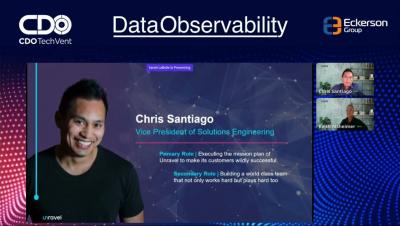
The Eckerson Group recently presented a CDO TechVent that explored data observability, “Data Observability: Managing Data Quality and Pipelines for the Cloud Era.” Hosted by Wayne Eckerson, president of Eckerson Group, Dr.
Firms are burdened with tech debt and endless regulatory compliance, often leaving innovation last to receive the necessary budgets. Data-fuelled innovation requires a pragmatic strategy. This blog lays out some steps to help you incrementally advance efforts to be a more data-driven, customer-centric organization.