Systems | Development | Analytics | API | Testing

Low-Code Automated Web Testing Offered by Sauce Labs

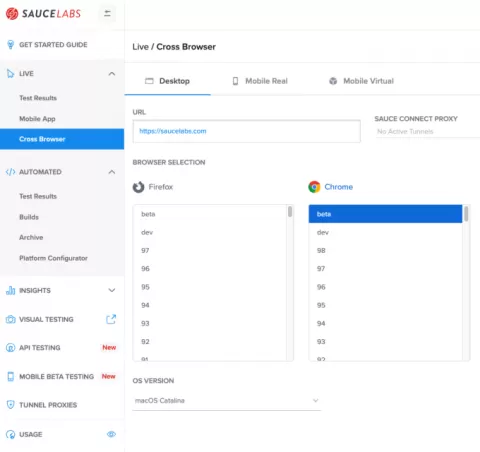
Intelligent low-code systems are beginning to take hold across the software development lifecycle and Sauce Labs is excited to be helping companies along this journey. Low-code automated testing simplifies and accelerates web application testing by enabling non-technical team members to create, run, and manage tests on Sauce Labs Virtual Device Clouds. Teams can now leverage Sauce Connect to execute their low-code tests behind a firewall, removing any friction presented with knowing how to code.

10 Things Testers Wish CIOs and CTOs Knew About Testing: Episode 7

In this new series from Sauce Labs, Marcus Merrell addresses ten things he wishes CIOs and CTOs understood about testing. In episode seven, Marcus makes his case for why testers belong on your scrum teams. Come along on this ten-episode journey to learn some best practices while Marcus dispels some myths about the testing space.

Testers Should Absolutely Be Part of the Scrum Teams

As a pragmatist, one thing that bothers me in movies is when characters withhold critical information from each other. Don’t get me started on all the secret plans that did and didn’t work in The Last Jedi. On the other hand, I realize that this is done by the writer to build drama and add tension to the story. It’s often a necessary evil to advance the plot. Well, friends, life is not a movie.

EPAM Testing-as-a-Service, Powered by Sauce Labs

We as a society have always been intrigued by the concept of testing. In fact readers of a certain age may even remember when we all became briefly obsessed with anthropomorphic crash test dummies in the late 80s and early 90s. What started out as an ad campaign about vehicle safety transformed into a line of toys, a television show and even video games.

The Screenplay Pattern Better Interactions for Better Automation - CTM Online

Automating interactions for tests is hard. For the past decade, the primary way to automate web UI interactions has been the Page Object Model. Unfortunately, page objects do not scale well because, by design, they allow lots of code duplication and unsafe activity. The Screenplay Pattern is a much better pattern for handling interactions. In Screenplay, Actors use Abilities to perform Interactions.