11 Improvements to Databox Charts Are Now Live
We’ve added 11 Improvements to Databox Charts. Now, you’ll be able to visualize and explore more of your data right from within Databox.


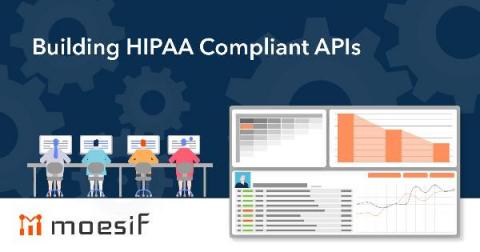
Legal disclaimer: Nothing stated herein is legal advice. It is provided for informational purposes only. You should work closely with legal advisors to determine exactly how HIPAA may affect your business. Health care represents 17% of US GDP, around $4 trillion in 2020. COVID has normalized the use of remote medicine and accelerated the dispersion of health care away from doctors’ offices and hospitals, to services being delivered on smartphones and online apps.
Many BigQuery users ask for database triggers—a way to run some procedural code in response to events on a particular BigQuery table, model, or dataset. Maybe you want to run an ELT job whenever a new table partition is created, or maybe you want to retrain your ML model whenever new rows are inserted into the table. In the general category of “Cloud gets easier”, this article will show how to quite simply and cleanly tie together BigQuery and Cloud Run.
Insurance legacy systems are often seen as one of the biggest barriers to speeding up innovation and digitalization. And the COVID-19 pandemic has made even clearer how important it is to be able to respond quickly to changing conditions, and a less physical world. So how can insurers make the most of their legacy systems and avoid creating new ones in the process?
Getting quality bugs is only half the QA battle—you need issue reports showing actual testing session insights that could negatively impact your users. And if you have skilled manual testers to help you find these bugs, the next problem becomes…how do you fix them? For that, you need contextual information about the steps and environmental conditions leading up to the bug.
In Part 1 we learned how to set up our Xplenty pipeline to work with Chartio and prepared the data source. In Part 2, we will focus on using the data Xplenty provides in the Chartio platform. If you're new to Chartio, you can read through their QuickStart docs (shouldn't take more than 5-10 minutes) to gain some familiarity.
Snowflake met with Jan Doumen, Head of Expertise for Allianz Benelux, and Naveed Memon, Program Director, Data and Analytics for Emirates, at Data Cloud Summit 2020. Read excerpts from the conversation to learn how capturing data insights in the Data Cloud brings value to their businesses. Data’s value in the 21st century is often compared to oil’s value in the 18th century. It can transform organizations, opening doors to unprecedented opportunities.