Systems | Development | Analytics | API | Testing

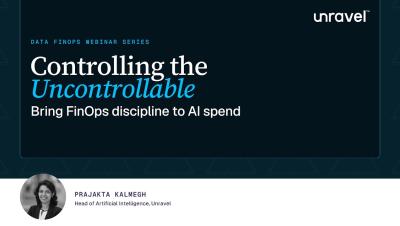
Controlling the Uncontrollable: Bring FinOps discipline to AI spend

AI costs are unpredictable and behave nothing like traditional cloud spend. FinOps teams face new challenges: opaque model pricing, and hidden costs in places like prompt design and context length. In this session, our Head of AI, Prajakta, will show you how to bring FinOps discipline to AI costs: how to see them, attribute them, and optimize them. She’ll give you practical levers that can cut AI costs by 20 – 80%.

Tricentis Data Integrity: The one question your data quality tools can't answer.

Your data quality tools check data inside their scope. But can they tell you whether data is still right after it moves across three systems and five transformations? In this video, Adnan from Tricentis explains the gap that data quality tools were never designed to fill. Data moves from your ERP to your data warehouse, to your reporting layer, and from one cloud to another, and every boundary it crosses is a chance for something to change. Learn how end-to-end testing and data reconciliation complement your existing tools by testing data from source to target.

Connect Replit to On-Prem SQL Server

Connect Replit to an on-prem SQL Server database without opening a single firewall port or handing over a database password. In this video I put DreamFactory in front of a SQL Server database on my local network, generate a REST API from it, lock that API down with a read-only role and a scoped API key, then I have Replit build a live delivery operations dashboard on top of it. Replit calls the API from the app's backend, so the key never reaches the browser.

Connect AI Studio to On-Prem SQL Server (No Open Ports)

Connect Google AI Studio to an on-prem SQL Server database without opening a single firewall port or handing over a database password. In this video I put DreamFactory in front of a SQL Server database on my local network, generate a REST API from it, lock that API down with a read-only role and a scoped API key, then I have AI Studio build a live delivery operations dashboard on top of it. AI Studio calls the API from its own Node server, so the key never reaches the browser.

How to Use an On-Prem Database With Lovable

Connect Lovable to an on-prem SQL Server database without opening a single firewall port or handing over a database password. In this video I put DreamFactory in front of a SQL Server database on my local network, generate a REST API from it, lock that API down with a read-only role and a scoped API key, then have Lovable build a live delivery operations dashboard on top of it. Lovable calls the API from a server-side function, so the key never reaches the browser.

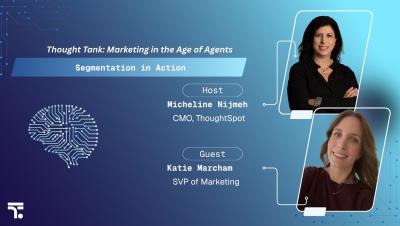
How ThoughtSpot's Marketing Team Built an Agent to Segment Their Entire Database

Marketing teams spend more time waiting on ops tickets to segment their database than they do actually running campaigns. By the time the segmentation comes back, the brief has changed, the moment has moved on, and someone is already asking for a revision. In this clip from the Thought Tank: Marketing in the Age of Agents, ThoughtSpot SVP Marketing EMEA Katie Marcham introduces the agent her team built to change that. They call it Slicy McSliceface, and it does exactly what the name suggests.

Spot flaky tests and failure trends with agentic QA | SmartBear BearQ

Wondering which of your AI-driven tests need attention right now? Watch this video to learn how SmartBear BearQ spots flaky tests and failure trends the moment they happen, so you always know exactly where to focus. Each report summarizes what happened and surfaces the issues BearQ detected, whether while exploring your app or running a scheduled test. Drill into failed tests to see exactly which runs broke and why, track trending results over time, and review open issues found across both passing and failing runs.

Usability Testing for Better UX: Fixing Real-World Design Friction

After two decades in quality engineering, you learn that passing test runs can lie. Pipelines turn green, unit suites hit target coverage numbers, and servers return clean HTTP 200 codes. Then the build lands in front of live users, and adoption falls flat. People get stuck on form fields, miss primary actions, and abandon checkouts. The code works, but the product fails. Functional testing proves an engine runs.

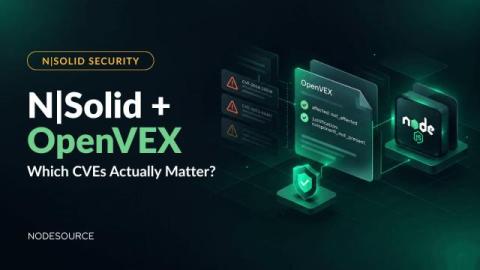
Not Every CVE Is Exploitable: How N|Solid Uses OpenVEX to Add Security Context

Finding a vulnerability is only the beginning. Modern applications depend on hundreds or even thousands of software components, and vulnerability scanners are essential for identifying known security issues across those dependencies. But there is a problem: the presence of a vulnerable dependency does not always mean your application is actually exploitable.