We collect the latest Development, Anaytics, API & Testing news from around the globe and deliver it direct to your inbox. One email per week, no spam.
This video provides a step-by-step demonstration of how to record an application's real-world traffic and generate an automated sandbox environment for debugging and testing.
Learn how to generate API contract tests automatically from an OpenAPI specification using SmartBear Swagger Contract Testing's drift init command. Instead of writing tests endpoint by endpoint, you'll generate your first contract test suite in minutes. This video shows the full loop.
SmartBear BearQ, an agentic QA system, has won a 2026 CRN Tech Innovator Award. CRN, a brand of The Channel Company, named BearQ a winner in the Application Development and DevOps category, calling it out among the most innovative technologies shaping the IT channel this year. AI has changed how fast software gets built, but for many organizations, testing hasn’t kept pace.
We spend thousands of dollars "token maxing" and running endless debugging cycles just to walk our LLMs through a problem. But is the AI actually failing, or are we just withholding the right environment? Giving your AI assistant its own sandbox to test hypotheses might just be the missing link in your development workflow.
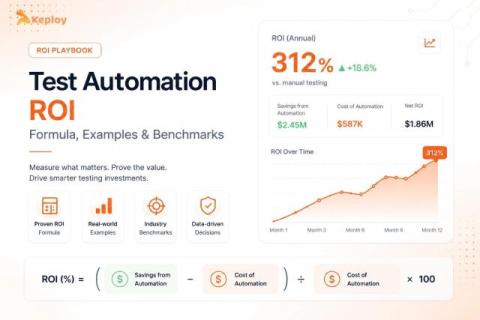
Your team automated hundreds of test cases. Leadership wants to know if it was worth it. Most engineering teams can’t give them a number. That’s what gets automation budgets cut. Proving test automation ROI means translating testing activity into financial terms: hours saved, defects prevented before they cost 5-10x more to fix in production, and release cycles shortened enough to matter on a balance sheet. The formula exists. The benchmarks exist.
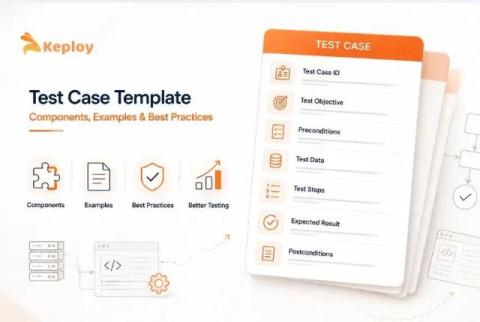
Without a test case template, test cases drift. One tester writes three-word steps. Another skips preconditions entirely and wonders six months later why nobody can reproduce the bug that shipped to production. A third writes paragraphs where steps should be. The test case template fixes this. It gives every tester on your team the same starting point: the same test case format, the same fields, the same expectations for what "documented" means. The goal isn’t bureaucracy.
I made an API endpoint 13 times faster. Then I realized my first verification only checked the status, headers, and response schema. I had not checked the totals. I had made the bug faster. That is the problem with giving an AI coding agent one kind of evidence. A CPU profile can show where the application is slow, but not whether an optimization preserves behavior. A traffic replay can prove that behavior stayed stable, but not explain why the code burns CPU.
Key takeaway: When code moves at AI speed and testing stays manual, the widening gap between a code change and its test coverage becomes your biggest quality risk. SmartBear ReadyAPI MCP reduces that gap by letting you generate, run, and heal API tests in plain language, right inside the Claude, Copilot, or Cursor session that wrote the code.
Shift left vs shift right testing isn’t really a debate. Teams that treat it as one end up with gaps that neither approach covers alone. Shift left catches defects before they reach production. Shift right learns from what happens after they do. The teams shipping most reliably in 2026 don’t choose between them. They run both and build a feedback loop where each approach makes the other more effective.