Systems | Development | Analytics | API | Testing

How to Add Intent and Metadata to OpenAPI in Swagger Studio for AI Agents

Modern APIs aren’t just read by developers anymore; they’re also interpreted by tools and AI agents. In this video, Solutions Architect Joe Joyce walks through how to enrich an OpenAPI definition in Swagger Studio with meaningful metadata such as descriptions, summaries, operation IDs, tags, schemas, and examples. You’ll see step-by-step how these additions help tools and automated agents better understand API intent, purpose, and semantics. This turns your OpenAPI definition into a contract that scales beyond documentation.

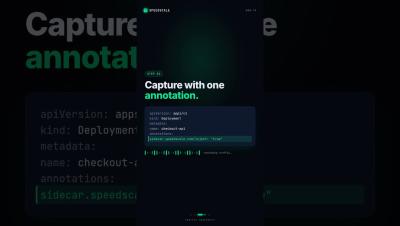
Is OpenTelemetry overkill? There's a lazier (and better) way. #speedscale #sre #ebpf #kubernetes

If you "aspire to be lazy" like we do, you know that building staging environments and mocking complex back-ends (like MySQL, AI models, and 3rd party APIs) is a massive time sink. In this demo, we show you how to use Internet Magic (aka eBPF) to: Stay tuned for Part 2, where we take these recordings and spin up a staging environment automatically.

AI test automation with full visibility | Qmetry + Reflect integration

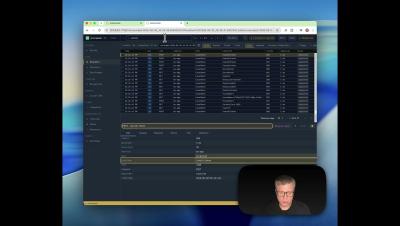
In this demo, you’ll see how Reflect and QMetry work together to connect automated testing with test management. In this short walkthrough, test execution from Reflect flows directly into QMetry, giving your team better visibility, reducing manual effort, and helping you move faster without losing control of quality. If you’re looking to scale testing while keeping everything organized and traceable, this integration is built for you.

Turn test data into release insights with AI | SmartBear MCP for Zephyr

Testing teams need to know if they’re ready for a release. Getting answers within Jira, however, often means jumping between multiple screens and reports. In this demo, see how you can query your test data with SmartBear MCP for Zephyr to get insights directly from your testing system of record, so you can make faster, more informed release decisions. From within AI tools like Copilot, Claude, or VS Code, you’ll learn how you can.

The Axios Supply Chain Attack Proves Why Server-Side API Credential Management Is Non-Negotiable

On March 31, Axios—the most widely used HTTP client in the JavaScript ecosystem, with approximately 100 million weekly npm downloads and a presence in roughly 80% of cloud environments—was compromised via a hijacked maintainer account. Two malicious versions (1.14.1 and 0.30.4) delivered a cross-platform remote access trojan (RAT) that harvested credentials, SSH keys, cloud tokens, and API secrets from every machine where they were installed.

The Axios npm Supply Chain Attack: A Complete Technical Analysis of the Maintainer Hijack, Cross-Platform RAT, and Enterprise Impact

On March 31, an attacker hijacked the npm account of Axios’s primary maintainer and published two malicious versions of the most popular HTTP client library in the JavaScript ecosystem. The backdoored packages—axios@1.14.1 and axios@0.30.4—injected a trojanized dependency that delivered cross-platform remote access trojans to macOS, Windows, and Linux machines within seconds of installation.

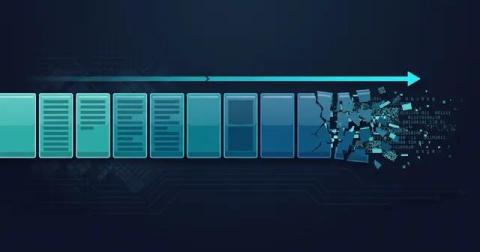
Five Supply Chain Attacks in Twelve Days: How March 2026 Broke Open-Source Trust and What Comes Next

Between March 19 and March 31, five major open-source projects were compromised in rapid succession: Aqua Security’s Trivy vulnerability scanner, Checkmarx’s AST GitHub Actions, the LiteLLM AI proxy on PyPI, the Telnyx communications library, and Axios—the most downloaded HTTP client in the npm registry. Collectively, these projects serve hundreds of millions of installations across virtually every enterprise software environment on earth.

The quiet crisis in software quality - and what autonomous testing changes

There’s a tension building inside most engineering organizations right now, and not many people are talking about it openly. AI has given development teams an extraordinary gift: the ability to build faster than ever before. Features that once took days can be prototyped in hours. Applications that required large teams can now be scaffolded by a handful of engineers with the right tools. By almost every measure of development velocity, we are living through a remarkable moment.