It's time to move your CI/CD to the cloud
In this article, I'll walk you through the differences between self-hosted CI/CD and cloud-based CI/CD (like Bitrise!) and show you why it's time to move into the cloud.


In this article, I'll walk you through the differences between self-hosted CI/CD and cloud-based CI/CD (like Bitrise!) and show you why it's time to move into the cloud.
If you’re reading this, chances are your organization is already aware of the additional management effort, devices, and testers required to ensure quality QA through software testing. You’re likely not doing it alone. Your in-house testers and external resources are probably scattered across different testing management platforms and software. But multiple platforms make collaboration more complicated than it needs to be.
In digital transformation projects, it’s easy to imagine the benefits of cloud, hybrid, artificial intelligence (AI), and machine learning (ML) models. The hard part is to turn aspiration into reality by creating an organization that is truly data-driven.
Fivetran dbt Packages accelerate analytics with off-the-shelf SQL for data modeling.
For the DevOps-averse developer, lambdas are heaven. They can focus on writing self-contained and modularized pieces of code, deploying these functions for on-demand execution without being concerned about resource management or infrastructure. Lambda execution , however, can be tricky. Serverless security with the AWS API Gateway can feel daunting, especially when all you want to do is call a simple function as an API endpoint. For this, there’s the ease of Kong Gateway .
This blog post tells the story of why and how we migrated from the Node Redis client library to Ioredis.
In this two-part series, you’ll get a comprehensive overview of everything you need to know to test your LiveView applications in Elixir. In Part I, I’ll introduce you to LiveView testing guidelines and you’ll write some flexible and elegant LiveView unit tests. In Part II, you’ll write interactive LiveView tests that validate a full set of live view behaviors.
Building on Bitrise is about to get faster and more flexible. Farewell to concurrency limitations and build time-outs, as you access our most powerful machines to date.
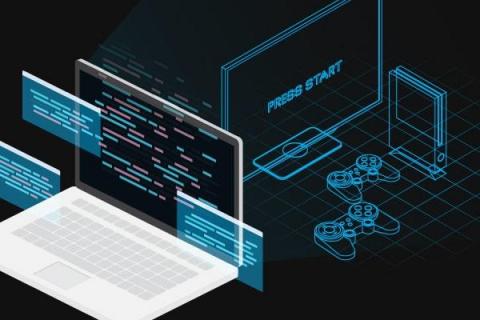
As Atlassian has decided to deprecate their server products, including Jira Server and Confluence Server, game studios using these products have to look for alternatives, or swallow the cost to migrate to Atlassian’s other products (Cloud or Data Center). Let’s explore how life may look like after Jira, as this is something we have discussed with several game studios since Atlassian made their announcement .