Systems | Development | Analytics | API | Testing

Why AI support fails in production: The infrastructure problem behind every incident

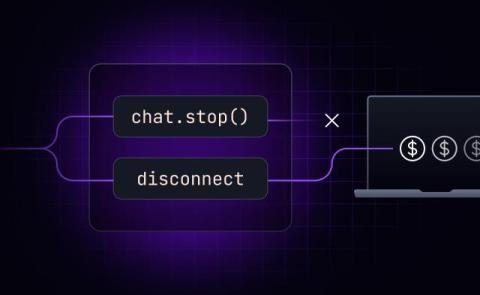
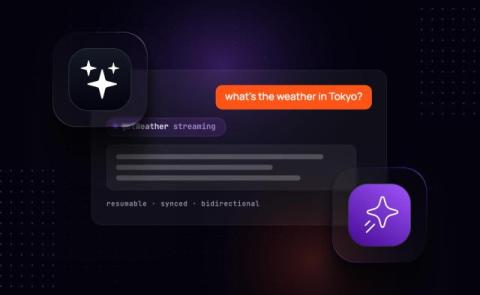
HTTP streaming – the default transport underneath every major agent framework – was never designed for sessions that survive a tab close or hand off cleanly between participants. Two failures surface consistently in production CX products because of this. Both generate support tickets about conversation state and prompt quality. Both trace to the transport layer. The scenario that illustrates them: a customer contacts support about an order that's partially shipped and partially stuck.

Stateful agents, stateless infrastructure: the transport gap AI teams are patching by hand

Every major layer of the AI stack now has a name. Model providers - OpenAI, Anthropic, Google - handle inference. Agent frameworks - Vercel AI SDK, LangGraph, CrewAI - handle orchestration. Durable execution platforms like Temporal make backend workflows crash-proof.

Beyond the Dashboard: Using Telemetry to Solve the Unknown Unknowns of Performance

Your dashboards are lying to you, not through bad data, but through incomplete data. They show you what you told them to watch. They cannot show you what you did not know to ask. Telemetry-driven performance engineering uses metrics, logs, traces and profiling to detect and diagnose issues that traditional dashboards cannot capture. The failures that hurt most are not the ones you predicted; they are the ones your monitoring was never designed to catch.

Best Self-Service Analytics Tools for Agencies (Compared by Client Usability + Multi-Client Scale)

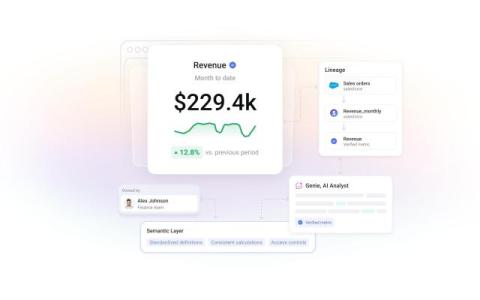
An agency-friendly tool cuts reporting time per client without turning every dashboard question into a support ticket. An Account Director sits down two hours before a monthly client call, sees the same pattern again, and opens PowerPoint. The dashboard exists, but the client never “gets it” without a guided tour, so the agency rewrites the story every month to prevent confusion and churn. A dashboard your client can’t read independently is a service ticket waiting to happen.

From Microservices to AI Traffic: Kong's Unified Control Plane When Architecture Gets Complicated

Modern enterprise architecture faces a three-body problem. Three distinct traffic patterns pull your teams in different directions. External APIs serve mobile apps and partner integrations. Internal microservices communicate within Kubernetes clusters. AI and LLM calls flow to OpenAI, AWS Bedrock, and self-hosted models. Each pattern looks API-like on the surface. Yet many organizations handle them with separate tools. The result?

Appian Q1 Product Highlights: Modernize Faster, Automate Smarter

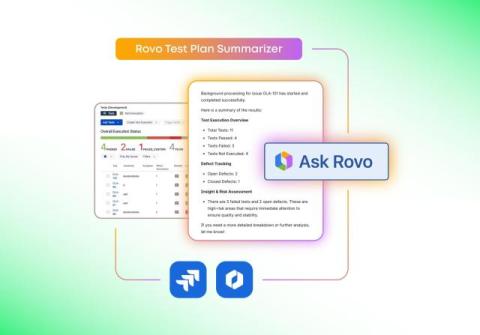
Appian’s latest updates deliver powerful new tools to consolidate legacy systems, automate complex knowledge work, and scale data integration. Modernization projects are notoriously high risk, but Composer derisks the start of your journey by ensuring total stakeholder alignment before development begins.

SwiftUI vs UIKit: Which Should You Use for iOS Development?

The SwiftUI vs UIKit question may seem like a sticky web of pros, cons and competing nuances. But ultimately, it boils down to one thing: Which framework is best for my specific app? The answer shouldn’t be based on hype or trends. It should be based on your own real-world parameters, like team size, UI complexity and long-term maintenance. Understanding your own development realities is crucial to making the right choice between SwiftUI and UIKit.

The 4 Golden Signals of Monitoring Explained

As a team, we have spent many years troubleshooting performance problems in production systems. Applications have become so complex that you need a standard methodology to understand performance. Our approach to this problem is called the Golden Signals. By measuring these signals and paying very close attention to these four key metrics, providers can simplify even the most complex systems into an understandable corpus of services and systems.

7 Best Service Virtualization Tools in 2026

Service virtualization tools have become indispensable for organizations seeking to streamline their testing and development processes. These tools allow teams to simulate the behavior of critical software components, enabling more rapid development with overall cost reduction and improved collaborative outcomes. As demand mounts for service virtualization solutions, identifying the best tools to support this workflow in the software development lifecycle has never been so important.