Systems | Development | Analytics | API | Testing

Stop Chasing Ghosts, Use Observability to Find Real Performance Gremlins

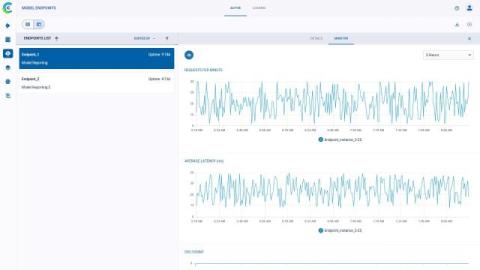
Performance testing without observability is like diagnosing a sick patient using only a thermometer. You get one number. You miss everything that matters. Observability-driven performance testing combines load testing with metrics, logs and distributed tracing to identify not just when performance degrades, but exactly why.

ThoughtSpot Data Mashups: One Governed Dataset, Any Source

Your data’s never lived in one place. Customer records might be in your CRM, while sales and operational metrics are split among data platforms. And somewhere, there's critical budget data living in a spreadsheet, owned by a single person on the finance team. Bringing it together has always come at a cost of speed vs. governance.

Designing MCP Servers for Observability

Observability is the key to understanding and improving MCP servers. These servers connect AI agents to tools, but without visibility, issues like slow responses, errors, or security risks can go undetected. Observability helps track how agents interact with tools, pinpoint failures, and optimize performance.

SAP testing is broken. Agentic AI is how we fix it.

Software testing has a bad rap for bottlenecks — and nowhere is that truer than in the SAP world. An overwhelming majority of SAP orgs continue to rely on manual testing practices that can consume up to 30% of implementation budgets, making QA out to be a persistent roadblock to transformation. To be fair to SAP QA teams, the issue is not as much about inefficiency as complexity.

AI Coding Agents Break What Works

Your AI coding agent just made every test pass. Ship it, right? Not so fast. A growing class of AI-generated bugs doesn’t come from writing bad code. It comes from the AI changing working code to accommodate its own mistakes. This isn’t a theoretical risk. It’s happening now, in production codebases, and it’s harder to catch than any bug the AI might introduce from scratch.

SwiftUI Button Guide: How to Create and Customize Buttons

If we want our apps to succeed, we have to get our buttons spot on. They allow our users to navigate around our apps, show their preferences and define their own personal user journeys. Not only that, they play a crucial role in the overall look and feel of our apps, and enhance our overall brand image if we get them right.

Policy-Driven APIs for AI: Best Practices | DreamFactory

Before rolling out policy-driven APIs, it's crucial to have a governance framework in place. This framework should clearly outline who makes decisions, how approvals work, and how exceptions are handled. Interestingly, while 71% of organizations claim to have data governance programs, only 25% actually put them into practice. Even fewer - just 28% - have enterprise-wide oversight for AI governance roles and responsibilities.

Create tests in Reflect directly from your coding agent!

If you’ve used Claude Code, GitHub Copilot, Cursor, or any coding agent, you already know the feeling. You describe what you want in plain language, the agent figures out the steps, and you watch it work. When something goes wrong, it backs up and tries a different approach. Reflect now brings that same agentic workflow to test automation. Through the SmartBear MCP server, any coding agent that supports MCP can connect to Reflect and build tests from high-level objectives.

How to Teach Your AI Agent to Build Keboola Data Apps

You can build Data Apps inside Keboola with Kai. But what if you prefer working with Keboola via MCP, in Claude Code, Cursor, or another AI-powered editor? Want to build a JavaScript Data App that Kai doesn't support yet? That's what the Keboola AI Kit is for. It's a set of skills you install into your agent so it knows how to work with Keboola - how to query your data, how to structure a Data App, how to deploy it. Here's how to set it up.

Does your AI stack need a session layer? A maturity framework for teams building AI agents

Most teams building AI agents start with HTTP streaming. It's the right starting point. Every major agent framework defaults to it, it gets tokens on screen fast, and for a single-user prompt-response interaction it works well. The question is when it stops being enough - and how to recognise that before it turns into user experience problems, engineering waste, and technical debt that constrains what your product can do.