Systems | Development | Analytics | API | Testing

Agentic AI in Banking: How Autonomous AI Is Changing Financial Services

Quick answer: Agentic AI in banking refers to AI systems that don’t just generate text or answer questions – they take a goal, break it into steps, use tools and data sources, make decisions, and complete multi-step workflows (like investigating a fraud case or processing a KYC file) with minimal human intervention, looping in a person only for genuine judgment calls. Walk into any banking technology conference in 2026, and you’ll notice the conversation has quietly shifted.

React Native Automation Testing: Best Practices, Tools, and Frameworks

Cross-platform builds promise rapid delivery through a shared codebase, yet QA teams encounter stubborn regression roadblocks across Android and iOS. React Native connects JavaScript threads to native host views via an asynchronous message channel. When test runners dispatch actions faster than native components finish rendering, automated assertions trigger false alarms without underlying code failures.

Automated Document Processing: 5 Examples and Key Benefits

Automated document processing, also known as intelligent document processing (IDP), uses artificial intelligence and machine learning to reduce the manual effort required to extract data from paper or digital documents. Why is that vital? As organizations continue to modernize in their workflows, enterprises still need to grapple with enormous volumes of documents, such as invoices, receipts, and contracts. Manual data entry and rekeying of document data creates an operational bottleneck.

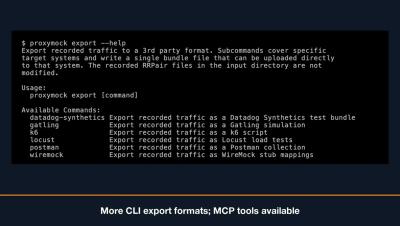
From Handwritten Mocks to proxymock: The Complete Loop

Handwritten mocks are cheap one at a time. This series built enough of them to show how quickly that stops being true. Nine posts took one package notifier from a function returning "delayed" to a captured response from a real carrier. Along the way, we hand-authored canned successes, failure cases, a spy, a stateful fake, an HTTP server, response fixtures, and contract-drift tests in four languages.

Beyond Playwright: Building a Central Test Hub with Selenium, Cypress, and Katalon

Most QA teams do not use one automation framework. They use two or three. Selenium handles the legacy suite and cross-browser regression. Playwright covers the newer end-to-end flows. Cypress runs the frontend component tests that developers wrote. Maybe there is an Appium layer for mobile. Each framework was adopted for a good reason. Each solves a real problem. But the result is fragmented visibility. Test results live in separate CI jobs. Reporting requires pulling data from multiple sources.

Raw WebSockets for AI streaming: when patching stops paying off

Raw WebSockets drop connections, lose track of canceled responses, and don't natively reach a second device. If your AI streaming feature has been in production for a while, you've probably already built a fix for at least one of these and found another one waiting. Reconnection, cancellation, multi-device delivery, and crash detection are the four problems raw WebSockets leave for you to solve, and each is its own piece of infrastructure to build. Solve one, and the other three remain unsolved.

AI in Claims Processing: What's Actually Working in 2026

‍AI claims processing applies predictive models, machine learning, computer vision, and generative AI across claims workflows. These technologies analyse documents, images, policy terms, historical records, and structured claim data. Insurers use AI for document extraction, claim triage, fraud detection, damage assessment, and adjuster assistance. Predictive models classify claims, estimate severity, and identify cases requiring specialist review.

From CoWork to Action: How to Make Snowflake CoWork Production-Ready

AI agents are moving rapidly from experimentation to execution, and Snowflake CoWork is making it easier for teams to put AI to work across everyday business workflows. But knowing how to use CoWork effectively is only the first step. The bigger question is: how do you make sure the data powering those workflows is complete, current, and reliable enough to trust?

What You Need to Know About Kubernetes vs. Docker Compose

Choosing between Docker Compose and Kubernetes can feel overwhelming, especially when both play an important role in modern containerization strategies. In this video, Zend Professional Services Manager Adam Culp breaks down Kubernetes vs Docker Compose. You’ll learn the essentials of container orchestration, discover when simplicity is an advantage, and understand when it's time to scale—plus, he recommends a new tool that can help, whether you choose Kubernetes or Docker Compose.

Reduce API governance and documentation time to minutes | SmartBear Swagger Studio

In this video, you'll learn how SmartBear Swagger Agents, built right into SmartBear Swagger Studio, cut the process of manual API governance reviews and documentation from weeks to minutes, generating API definitions that are specific to your APIs and compliant with your organization's governance rules from the start.