Systems | Development | Analytics | API | Testing

New Challenges in Software Quality Brought by GenAI and LLMs | Federico Toledo | #Testflix2024

In this compelling talk, Federico delves into the new challenges in software quality brought by the rise of Generative AI (GenAI) and Large Language Models (LLMs). As these advanced technologies become more integrated into applications, ensuring their quality presents unique hurdles. He explores the specific quality concerns associated with using LLMs, GenAI, and Retrieval-Augmented Generation (RAG), and discuss innovative testing approaches tailored to these systems. This session is designed to help you navigate these complexities, ensuring your applications not only meet but exceed quality standards.
Functional Testing: An In-Depth Overview

To define it simply, we can say- Functional testing ensures every part of an application does exactly what it’s supposed to do. It’s about verifying that the software’s functions and features behave as expected from an end-user’s perspective. And unlike other types of testing, such as performance or load testing, functional testing focuses on the functionality itself rather than factors like speed or stability under load.

KPIs for Cost Management: Evaluating Costs in Databricks

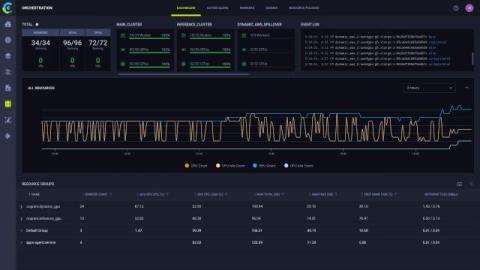
Precise cost forecasting and management are essential, yet 80% of data management experts struggle (Forrester). The challenges stem from a lack of granular visibility, siloed data, and the absence of AI-driven predictive tools.Discover your new set of metrics to understand and optimize your spending with Unravel Data. Watch this Weekly Walkthrough series, FinOps Metrics that Matter, to understand these core metrics to speak the language of both finance and data engineering, and bridge the gap between technical and business stakeholders.

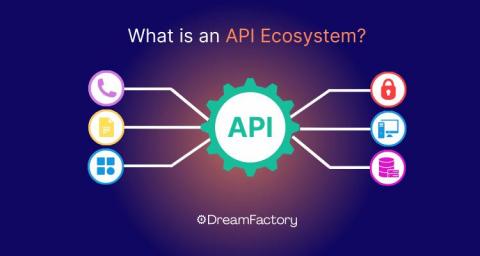
What is an API Ecosystem?

An API ecosystem refers to the interconnected network of applications, services, and APIs that collaborate to enable data exchange, functionality, and interactions between various software components. An API connects all the software developments so they can work together. Developers can connect apps that don’t normally work together, allowing for combined strengths and opportunities to close gaps in product capabilities.

Why CSPs Should Consider Using GPU-as-a-Service

When it comes to building AI models, the process is often oversimplified as “just get a GPU and start building.” While securing access to GPUs can be a challenge, gaining access to GPU clusters is only the beginning of the journey. The real complexity lies in effectively leveraging GPU capabilities to deliver meaningful business impact.

Unlocking Faster Insights: How Cloudera and Cohere can deliver Smarter Document Analysis

Today we are excited to announce the release of a new Cloudera Accelerator for Machine Learning (ML) Projects (AMP) for PDF document analysis, “Document Analysis with Command R and FAISS”, leveraging Cohere’s Command R Large Language Model (LLM), the Cohere Toolkit for retrieval augmented generation (RAG) applications, and Facebook’s AI Similarity Search (FAISS).

Bitrise Release Management introduces CI Agnostic distribution for testing and releasing to stores

We understand how complex app distribution can be, especially when juggling multiple tools for mobile app testing and store releases. This is what prompted us to build Release Management back in 2022. Originally tightly coupled to Bitrise CI, we're excited to announce that Release Management can now be used with any CI tool. This means all mobile teams can use Release Management, and we're offering it with a generous free tier, regardless of their CI tool.

The Rise of Scriptless Test Automation: A No-Code Revolution

In the fast-moving world of software development, traditional testing methods are frequently inadequate since quality and agility are paramount. Although necessary, manual testing services can be labor-intensive and prone to human error. Organizations are using test automation services more often to assure perfect user experiences and speed product delivery.

What is Test Observability in Software Testing?

In software testing, it is our job to understand how applications behave in their real-world environment. With observability, teams gain a better view: not just detecting issues but understanding why they’re occurring in the first place. In testing observability, unlike traditional monitoring, which typically signals when things go wrong, observability focuses on why and where it happened so the team can optimize system health.