Like many other countries, India has made moves to protect consumers’ data. Comparable to the European Union’s General Data Protection Regulation (GDPR), India’s Digital Personal Data Protection Act (DPDPA) establishes new, higher standards for data privacy, timely breach notification, and consent management.
Cyber insurance has become a standard line item in enterprise risk management, and for good reason. The financial consequences of a significant cyber event, whether a ransomware attack that halts operations for weeks or a data breach that triggers regulatory scrutiny and third-party liability, can far exceed what any operational budget was sized to absorb. Insurance exists to handle that tail. Most organizations recognize this benefit and carry a policy.
If you've ever updated a dependency, scanned your project for vulnerabilities, or opened a GitHub Security Advisory, you've probably seen something like CVE-2025-13465. For many developers, it's just another identifier attached to a security warning. Easy to ignore, especially when your priority is simply getting your application shipped. But that small reference represents something much bigger: it's the common language the software industry uses to identify and communicate security vulnerabilities.
We're thrilled to announce a strategic technology partnership between **Kong** and **ModelOp**. As enterprises rapidly transition into the agentic era, they face a critical challenge: how to deploy AI fast enough to stay competitive without taking on unacceptable regulatory or security risks. Together, **ModelOp** and **Kong** are solving the "last mile" problem of enterprise AI delivery.
Product threat intelligence tells payment device manufacturers and payment service providers (PSP) about the vulnerabilities and attack techniques that threaten the products they build or rely on to process payments. In 2026, the kind of specialist product threat intelligence provided by firms like PCA Cyber Security is getting much more critical for compliance and cyber resilience.
Operational technology environments need a different kind of security leadership. A traditional IT security program usually focuses on users, endpoints, cloud systems, applications, identity, and data. OT environments add another layer: physical processes, industrial control systems, plant uptime, safety constraints, legacy assets, engineering priorities, and production continuity.
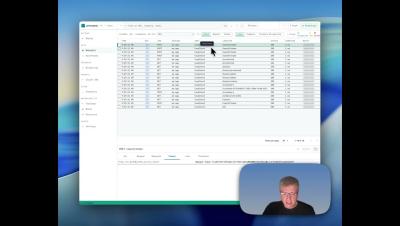
This video demonstrates how to use the ProxyMock web tool to record API traffic from a remote Kubernetes cluster and automatically scan it for hidden PII to ensure the data is safe for developers to use.
We demonstrate how to stream realistic test data directly from a production environment to developers and AI models without exposing any personally identifiable information (PII).
In late June 2026, two of the most widely used AI agent platforms were compromised within the same week. Langflow disclosed a critical unauthenticated remote code execution flaw. Dify, powering over one million applications, revealed four vulnerabilities that exposed private conversations and internal APIs across tenant boundaries. These weren't theoretical risks. They were production exploits hitting real infrastructure.