The age of agentic AI introduces unprecedented risks. In the rapidly evolving landscape of artificial intelligence, agentic AI is emerging as a transformative force, capable of autonomous decision-making, learning, and interaction. These sophisticated AI systems are poised to revolutionize industries and daily life. Conversely, these same capabilities can be exploited by attackers to launch highly effective and scalable cyberattacks. The advancement of AI brings a critical imperative.
Drone technology — also known as unmanned aerial vehicle (UAV) and unmanned aircraft system (UAS) technology — is expanding rapidly across commercial, industrial, and defense sectors. As these systems become more complex, they increasingly rely on sophisticated software for aerial embedded systems.
Keep test data private by avoiding production data and favoring synthetic data that mimics real patterns. If you must reproduce a production issue, fully anonymize and break any link to personal information, track data provenance, and limit access. Maintain relationships between datasets when generating synthetic records and confirm your software suppliers meet privacy standards. This approach helps teams satisfy GDPR and CCPA while testing effectively.
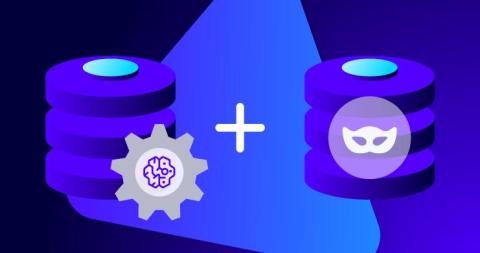
Your approach to Guidewire data masking could be inhibiting innovation at your company. Insurance companies have been racing to accelerate digital transformation. But I’ve watched many neglect to properly protect sensitive information in their environments. The risk is real and immediate. Every development cycle, QA test, and sandbox refresh becomes a potential compliance violation. Or worse, it could lead to security gaps for bad actors to exploit.
October marks Cybersecurity Awareness Month. It’s a timely reminder that the files you touch, share, and rely on every day often hold your most valuable data and are exactly what attackers are after. Unstructured data, like spreadsheets, documents, logs, and backups, makes up the majority of your business data. That’s what makes it the prime target for ransomware.
In today’s connected world, every enterprise depends on networks- from internal servers and employee devices to cloud platforms and hybrid systems. However, as these networks grow in size and complexity, they become prime targets for cybercriminals. By 2025, cybercrime will cost businesses $10.5 trillion annually, making it one of the most significant economic risks worldwide.
Data obfuscation offers a powerful solution to today's enterprise security challenges — and the stakes couldn't be higher. IBM reports that the global average cost of a data breach crossed $4.88 million in 2024. And 60% of the organizations we surveyed for our State of Data Compliance and Security Report have experienced data breaches or theft in non-production environments — up 11% from last year.
Struggling with SAP data security in your non-production environments? Learn how to effectively scramble, mask, and protect sensitive SAP data with Delphix Continuous Compliance. This solution demo showcases how you can achieve a zero-trust data construct for SAP, ensuring your test data remains realistic but fictitious.
OT cyber security is more than a buzzword-it's the line between operational continuity and complete shutdown. Operational Technology (OT) includes the systems that control physical processes, like factory machinery, hospital equipment, and power grids. When those systems are compromised, the impact isn't just digital-it's physical, financial, and sometimes even life-threatening.