Systems | Development | Analytics | API | Testing

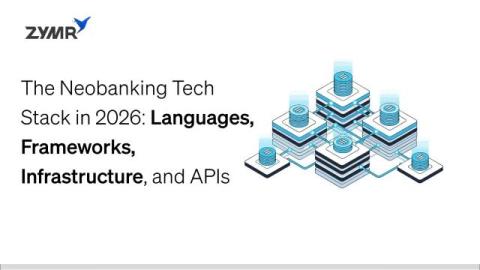
The Neobanking Tech Stack in 2026: A Complete Architecture Deep Dive

Here’s the uncomfortable truth. You don’t just choose a neobank technology stack, you commit to it. And that commitment compounds over time. In 2026, most fintech teams are no longer debating cloud native or API first, that part is settled. The real question is alignment. Does your architecture actually match your business model, your licensing path, and your scale ambitions? Because once you grow, changing your stack is not a simple rewrite.
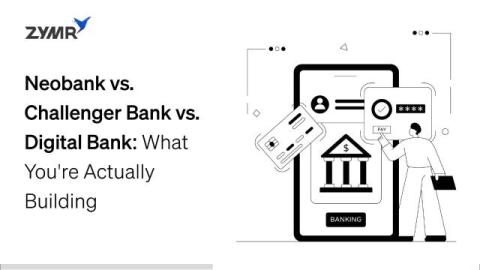
Neobank vs. Challenger Bank vs. Digital Bank: What You're Actually Building

The global financial landscape has shifted from digital-first to digital-only at a relentless pace. As we navigate 2026, the stakes for fintech founders and engineering leaders have never been higher. According to recent data from Fortune Business Insights, the global neobanking market is currently valued at approximately $310.15 billion, with a projected surge to a staggering $7.6 trillion by 2034.

How is Agentic AI rewriting Retail Banking?

Your customers are no longer comparing you to the bank down the street. They are comparing you to Amazon, Netflix, and every hyper-personalized digital experience they interact with daily. And most banks are losing that comparison. Quite literally! Somewhere between the legacy core systems, the compliance overhead, and the quarterly earnings pressure, a tectonic shift has started. Agentic AI is no longer a concept in a research paper.

How a Fractional CMO Turns Marketing Strategy Into Revenue Growth

Most growing businesses reach a point where their marketing stops working as well as it used to. The tactics that got them to a certain size aren't scaling. The team is busy but the results are inconsistent. There's no clear owner of the strategic picture, just a collection of activities running in parallel without a unifying direction.

Agentic Analytics in Finance: Lessons from Navan and EcoLab

Finance leaders are operating in one of the most demanding macro environments in recent memory. Interest rates are moving faster than most models anticipated, reshaping the cost of capital almost overnight. Supply chain fragility has also turned working capital management into a moving target, and geopolitical uncertainty is changing how you plan for the future. Yet for many finance functions, the analytics stack hasn't kept pace with that urgency.

Embedded Analytics in Regulated Industries - Healthcare and Finance

A dashboard inside an EHR, claims tool, or finance portal is not just reporting. It sits inside a decision path. That changes the bar. With embedded analytics in regulated industries, teams need access control, audit logs, clear metric logic, and a user experience that fits the workflow. Speed matters. So does usability. But compliance-by-design cannot sit after the fact. It has to be built in from the start.

From 50 Spreadsheets to One Source of Truth

The acquisition closed on Friday. The new CFO walks in on Monday morning. Within 48 hours, the Operating Partner sends a message: when do we get the first financials? The CFO opens their laptop and starts counting. Six ERPs. Three different chart of accounts structures. Two businesses that still report in spreadsheets emailed to a shared inbox. One entity whose close cycle runs two weeks behind the others. This is not a failure of diligence or talent.

The PE CFO Playbook: Your First 100 Days, Data-First

You close. The lenders want a covenant report in 45 days. Your finance team is running on spreadsheets, three ERPs, and a shared folder nobody has cleaned since 2019. This playbook is the week-by-week plan for exactly that moment — written for incoming CFOs, interim CFOs, and the Operating Partners who place them.

The 8-12 Week PE Financial Data Foundation Framework

Post-acquisition financial integration is the process of unifying financial data from a newly-acquired portfolio company's ERP into the PE group's reporting layer — without forcing subsidiaries to replatform. The 8-12 Week PE Financial Data Foundation Framework is a sequenced implementation plan, structured across four phases, that takes a portfolio company from acquisition close to live, automated portfolio visibility.

Microsoft and Disclosure Management: A Smarter Way to Work

Finance teams don’t need another system to learn. They need their existing tools to work better. That’s the core idea behind Next Generation Disclosure Management from insightsoftware — insightsoftware’s narrative reporting solution that plugs directly into Microsoft Word and Excel, bringing live data, built-in controls, and a full audit trail into the environment your team already knows by heart. No new interfaces. No copy-paste marathons.