Systems | Development | Analytics | API | Testing

Choosing Your Upgrade or Migration Path to Cloudera Data Platform

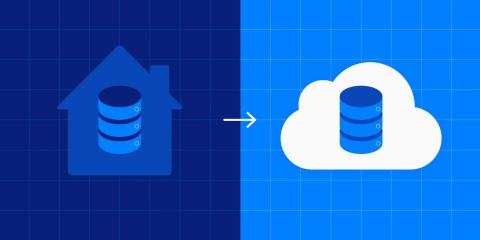
In our previous blog, we talked about the four paths to Cloudera Data Platform. If you haven’t read that yet, we invite you to take a moment and run through the scenarios in that blog. The four strategies will be relevant throughout the rest of this discussion. Today, we’ll discuss an example of how you might make this decision for a cluster using a “round of elimination” process based on our decision workflow.

Four Frameworks for Optimizing Cloud Strategy and Deployment

“40% of all enterprise workloads will be deployed in CIPS [cloud infrastructure and platform services] by 2023, up from only 20% in 2020.”.As the cloud permeates every aspect of business, decision-makers must make critical choices regarding infrastructure at every turn. Their answers will ultimately determine if every part of an organization is empowered to move forward in a cohesive way to reach business outcomes.

Run your jobs faster with Keboola's new feature: Dynamic Backend

Data transformations are the backbone of smooth-running data operations. Transformations are used in data replication between databases, data migration from cloud to on-premise, and data cleaning (aggregations, outlier removal, deduplication …) aka all the good stuff that goes into extracting insights from data. But as any data professional can attest, transformation can also be a painful bottleneck. Think scripts that run for an entire day and finish just before the next scheduled job.

Can you achieve self-service analytics amid low data literacy?

Customers wanting to drive self-service analytics as part of creating a data-driven organization will often ask, “Can we achieve self service analytics, when our work force has low data literacy?” Or they might say they are not ready for self-service analytics, incorrectly thinking they need first to improve data literacy. But the two are inextricably linked. I liken it to teaching a child to read without giving them any books on which to build their skills.

What Is Needed for an SFTP Connection?

Along with its security benefits, an SFTP connection is the quickest and most efficient way to transfer files between two local or remote systems. When transferring files or data from one server to another, using an SFTP connection is one of the best options to ensure this data remains untampered. Utilizing an SFTP connection is especially beneficial for commonly used data integration systems like ETL and Reverse ETL. So what makes SFTP so great, and what is even needed for an SFTP connection?

Pillars of Knowledge, Best Practices for Data Governance

With hackers now working overtime to expose business data or implant ransomware processes, data security is largely IT managers’ top priority. And if data security tops IT concerns, data governance should be their second priority. Not only is it critical to protect data, but data governance is also the foundation for data-driven businesses and maximizing value from data analytics. Requirements, however, have changed significantly in recent years.

Accelerating Insight and Uptime: Predictive Maintenance

Historically, maintenance has been driven by a preventative schedule. Today, preventative maintenance, where actions are performed regardless of actual condition, is giving way to Predictive, or Condition-Based, maintenance, where actions are based on actual, real-time insights into operating conditions. While both are far superior to traditional Corrective maintenance (action only after a piece of equipment fails), Predictive is by far the most effective.

Data Lakehouses: Have You Built Yours?

In traditional data warehouses, specific types of data are stored using a predefined database structure. Due to this “schema on write” approach, prior to all data sources being consolidated into one warehouse, there needs to be a significant transformation effort. From there, data lakes emerge!

Unlock Marketing Analytics Power with the Snowflake Data Cloud

Over the past two decades, marketers have faced an uphill battle in trying to turn marketing into a fully data-driven discipline. Our challenge is not that we don’t have enough data but that data has been difficult to access and use. Marketing, sales, and product data is scattered across different systems, and we can’t get a complete picture of what is going on in our businesses.