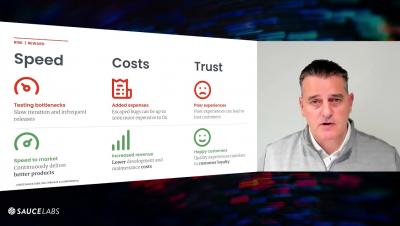
Frequent software delivery drives innovation. According to the State of DevOps Report, high-performing organizations deploy 200x more frequently and have 3x lower change failure rates than lower-performing organizations.This type of velocity and scale is only possible for a highly capable engineering team with an advanced DevOps infrastructure. However, legacy and startup organizations may have a harder time accomplishing this.
I’ve been testing software professionally since 2001, when I was in my late 20s—when my eyesight was perfect. As I’ve gotten older, I’ve struggled with whether to make the font bigger on my web browser or phone, or to carry my reading glasses everywhere I go. I have to make this choice because some web sites were developed to account for this, and some weren’t. As I get older, this problem is only going to get worse.
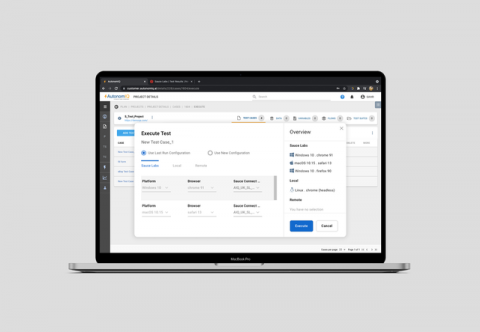
Testing any software project is an important step in order to find out how the software functions. Learning when the project acts as expected (and when it does not) is the ultimate goal of the testing process. Testing stops design errors from reaching production code. However, testing should not only happen before code is deployed.