Systems | Development | Analytics | API | Testing

Why Deterministic Queries and Stored Procedures Are the Future of AI Data Access

Executive Summary: As enterprises integrate AI and large language models (LLMs) into their data workflows, the need for predictable, secure, and auditable database interactions has never been greater. Deterministic queries—particularly those encapsulated in stored procedures—provide the guardrails necessary for both human analysts and AI systems to access sensitive data safely.

Building for Agentic AI

Our customers’ worlds are complex, and for good reason. It’s multi-cloud. It’s SaaS plus on-prem. It’s Snowflake, Databricks, AWS, Azure, Salesforce, and more. Underneath every one of those choices is the same constraint: data must be accessible, stay current, and stay controlled. The hard part is getting trusted data where it needs to be, when it needs to be there, with the controls to use it responsibly.

Making Data Work for AI

AI is not a pilot anymore. In 2026, it is the operating agenda. And if you’re leading a business or an IT project right now, you’re probably getting the same two questions. First: “When do we see real outcomes?” Second: “Can we trust what we’re getting?” Those are fair questions. They’re the right questions. Because the truth is, the model is rarely the problem. The hard part is everything around it. The data. The access. The silos. The controls.

Qlik: Making Data Work for AI

AI is moving fast, but outcomes still depend on one thing: trusted data, in the right place, at the right time, with the right controls. In this short Qlik story video, you’ll see how we help teams accelerate AI with confidence, turning data into answers you can explain, and actions you can stand behind. From strengthening supply chain decisions, to building a campaign plan in seconds, to spotting changes as they happen, Qlik connects analytics, automation, and governed AI experiences, so AI becomes operational, not experimental.

Streaming Data Integration with Apache Kafka

Data streaming with events supports many different applications and use cases. Event-driven microservices use data streaming, allowing companies to build applications based on domain-driven designs. This approach allows teams to break applications into composable microservices that can be worked on independently, speeding development. These designs scale well and can process huge amounts of data efficiently.

Why orchestrators become a bottleneck in multi-agent AI

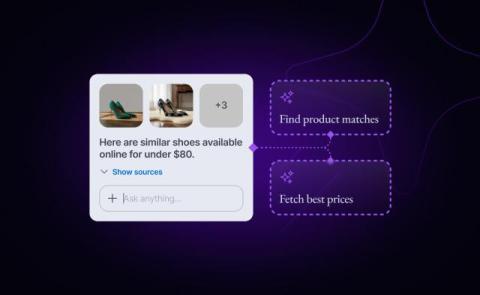
Complex user tasks often need multiple AI agents working together, not just a single assistant. That’s what agent collaboration enables. Each agent has its own specialism - planning, fetching, checking, summarising - and they work in tandem to get the job done. The experience feels intelligent and joined-up, not monolithic or linear. But making that work means more than prompt chaining or orchestration logic.

2026 Guide To Integrating AI Into Existing Apps

Have you ever noticed how your favorite apps just know what you want? Whether it’s a curated playlist that suits your mood, a movie recommendation that hits the spot, or ads that seem oddly relevant, none of it feels surprising anymore. These experiences have become so routine that we barely pause to think, “How does this even work?” But maybe we should.

Frank O''Dowd

AI is reshaping how sales teams find prospects, build relationships, and close deals. Frank O’Dowd, Cloudera’s Chief Revenue Officer, joins to discuss Cloudera’s approach to AI in the sales function. Frank details his philosophy, which is that rather than replacing the human touch, AI is helping sales professionals work smarter, offering insights, personalization, and efficiency at scale. It’s a complementary tool that can help sales teams make themselves relevant to their target audience. As Frank says in the episode, “The person with the most information always wins.”

Spotter 3: Your Smartest Analytical Partner Yet

Spotter 3 is our smartest agent yet. It acts as a true analytical partner that thinks, reasons, and validates its work—all automatically. It blends structured and unstructured data to go beyond traditional data sources, providing a complete picture of the business. With new skills, like Python coding and forecasting, Spotter 3 acts as your AI data scientist. Spotter 3 ensures every question leads naturally to confident, data-backed action.