Systems | Development | Analytics | API | Testing

A Simplified Guide to Cloud Data Platform Architecture

Since the 2006 launch of Amazon Web Services (AWS), the world’s first hyper-scale public cloud provider, thousands of data-driven businesses have shifted on-premise data storage and analytics workloads into the cloud by architecting or adopting a cloud data platform. As the volume, variety, and velocity of enterprise data continues to grow in 2023, cloud data platforms with legacy tech and complex architectures are becoming increasingly time-consuming and costly to manage.

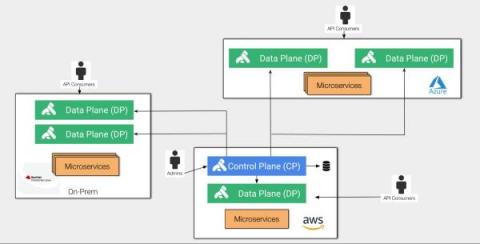
How and Why to Migrate From Kong Open Source to Kong Enterprise API Gateway

Kong’s open-source API Gateway is a highly successful project with over 33k stars on GitHub and 293 contributors. Kong provides a powerful platform that can be extended using hundreds of plugins provided by Kong, ecosystem partners, and the community. Kong’s Enterprise subscription provides an extended set of capabilities over and above the core foundation of Kong OSS. We will explore how to migrate an installed system from OSS to Enterprise here today.

Ensure Seamless Audio-Visual Quality for iOS Apps with Sauce Labs

With the latest manual testing feature from Sauce Labs, you can test your native iOS application’s audio output and video streaming quality to ensure a seamless customer experience. Game development studios, media companies, educational institutions, and entertainment platforms all rely on their app’s audio and streaming capabilities to evoke powerful and engaging experiences for their customers.

Hitachi Vantara: A Clear Vision for IIoT

Remember way back around 2016, when “IoT” was just entering the lexicon? The technology behind the “Internet of things” was starting to be used across industries. In the energy space, for example, companies used it to capture data being sent from tens of thousands of sensors from various equipment, like inverters, controllers, anemometers (wind speed detectors), cloud-watching cameras, and more.

Cloud Object Storage-based Architectures are Natively Scalable and Available

There is a long history of clustering architectures with respect to building distributed databases for two primary reasons. The first is scalability. If a cluster of nodes has reached its capacity to perform work, adding additional nodes are introduced to handle the increased load. The second is availability. The ability to ensure that if a node fails, let’s say during ingestion and/or querying, remaining nodes would continue to execute due to state replication.