Systems | Development | Analytics | API | Testing

The latest News and Information on Software Testing and related technologies.

How custom AI agents via MCP extend autonomous QA

Custom AI agents via MCP (Model Context Protocol) let an autonomous QA system reach beyond its built-in skills by connecting to external tools such as GitHub and browser automation services. In practice, that means a QA agent can inspect source code changes, identify new features, compare them against existing test coverage, and create missing test cases automatically. For teams managing growing test suites, this turns AI from a closed assistant into a connected workflow engine.

Capture once, test forever

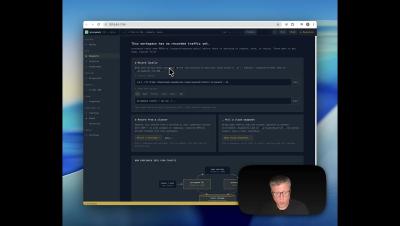
We’ve gotten used to understanding our applications through signals, summaries, and traces. Tiny little bits of information about how the app really works. Not because that’s the best way to do it, but because it’s been too hard to get the real thing. The real information exists. It’s on the network. How people called your app and what your code did. What other systems it called, the database queries it made, and the result sets that came back.

Fixing 403 auth errors when you replay traffic

Trigger warning: this one is about Java, authentication, and Docker Compose files. If that is not your thing, I am sorry, but they are part of life and they are honestly not that hard to work with. Everything here is open source on our GitHub repo, so you can follow along. Recording an authenticated Java flow, replaying it, hitting the dreaded 403, and fixing it with a proxymock recommendation.

Cypress vs Playwright vs No-Code Testing: Which Is Right for Your Team?

If your team is evaluating browser test automation, there’s a good chance the conversation starts with Cypress vs Playwright. Both tools have earned their popularity. Playwright is widely used by engineering teams that need reliable end-to-end testing, cross-browser support, and strong CI/CD integration. Cypress remains a favorite among frontend developers who want an interactive testing experience, fast local feedback, and approachable debugging tools.

What Is MTTR? Definition, Formula & Benchmarks (2026)

MTTR is the metric that tells you how long your users wait after something breaks. According to Splunk and Cisco’s Hidden Costs of Downtime 2026 report, unplanned downtime now costs organisations an average of $15,000 per minute. Across the Global 2000 companies, the aggregate annual cost has surged to $600 billion, a 50% increase in just two years. Engineering teams shipping to production multiple times a day face a simple reality: incidents aren’t a matter of if.

Generative AI for QA: How SDET Workflows and Skills Are Changing

Generative AI for QA is the use of large language models to accelerate the creation and analysis of testing artifacts — drafting test cases, summarizing requirements, and generating synthetic test data. AI agents extend that capability into multi-step autonomous workflows that plan, delegate, and execute testing tasks across an entire delivery pipeline. For SDETs, the shift is not about learning to prompt more cleverly.

Human in the Loop Testing: Where AI Ends and QA Judgment Begins

The question isn't whether to use AI in QA. It's knowing exactly where to keep a human in control. The core risk: Over 75% of multi-agent failures are silent semantic errors that pass automated checks but violate business logic — detectable only by human inspection (Cemri, Pan et al., NeurIPS 2025). The division of labor: AI owns repetitive generation and execution; humans own risk analysis, requirement interpretation, exploratory investigation, and final sign-off. The operational discipline.

CDSS EHR Integration Best Practices: A Technical Guide for Engineering Teams

Clinical AI projects usually fail during integration, not development. They work well in controlled environments, but production workflows expose problems. CDS Hooks and FHIR payloads can be inconsistent and incomplete. Engineering teams face a challenge: embedding clinical decision support into existing EHR workflows without disrupting care. The problem is not just about APIs. Teams must manage many things, including CDS Hooks, authentication, and latency constraints.