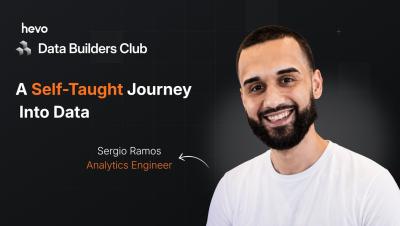
The Art of Building Reliable Data Stack with Sergio Ramos

In this episode of Data Builders Club, Sergio shares how teaching himself Excel sparked a career in analytics, why business context matters more than building flashy dashboards, and what it really takes to build reliable data systems that stakeholders trust. We also dive into data governance, stakeholder communication, AI in modern data teams, and why first-principles thinking will matter even more in the age of AI.

The Threats We See. The Risks We Don't

Living in South Florida, I've spent a lot of my career talking to customers about disaster recovery through the lens of hurricanes. Those conversations are easy because everyone understands the threat. We can watch a storm develop for days. Weather stations track every shift in direction. Data centers activate contingency plans. Business continuity teams prepare for impact.

Build a BigQuery AI agent with ADK & Cloud Run

In this video, Mazlum Tosun walks Martin Omander through building and deploying an AI data agent. Watch along as the team takes a BigQuery database (the company's data goldmine) and open it for plain English questions, using Agent Development Kit (ADK) and Model Context Protocol (MCP). Resource links: Speakers: Martin Omander, Mazlum Tosun Products Mentioned: BigQuery, Agent Development Kit, Cloud Run.

The Analytical Work Business Users Won't Hand Over to AI

The AI-analytics category has one operating assumption: AI’s job is to do more of what humans currently do. Adoption is measured by delegation surface. Success is when AI takes the whole task. Ask the executives running AI daily what they refuse to delegate, and you get a different story. Actually, you get the same story, from operators who do not know each other, running different companies, across different functions.

Beyond Migration: Elevating the SI Role to Strategic AI Architect

For years, the mandate for System Integrators (SIs) was clear: lead the "cloud-first" migration. The promise was lower costs, greater agility, and seamless innovation. But for many enterprise customers, that promise remains unfulfilled. Instead of agility, organizations have inherited a complex, fragmented data estate. Data is siloed across on-premises legacy systems and multiple public clouds, creating governance headaches and inflating infrastructure costs.

How to Ingest and Reconstruct Multiple Unrelated CSV Exports or a PostgreSQL Dump from an Acquired Legacy System

You ingest and reconstruct multiple unrelated CSV exports or a PostgreSQL dump from an acquired legacy system by first mapping the dump's underlying schema and relationships, then building a staged pipeline that loads raw files or tables as-is, reconstructs relationships through keys, and only then applies business logic to produce clean, usable records.

Natural Language to Data Pipeline: How to Build Migrations Without Writing Code

You build a data pipeline from natural language by describing the source, destination, and required transformations in plain English to a platform with a prompt-to-pipeline feature, which then generates a draft pipeline with inferred field mappings, transformations, and a schedule for you to review and adjust. This guide is for operations teams, data analysts, and junior team members who understand the desired outcome of a migration but don't write SQL or Python.